
What Can a 3000W Pure Sine Wave Inverter Power in RV, Marine, and Off-Grid Systems?
author: DAMAVO
2026-09-18
A pure sine wave inverter 3000W is a high demanded inverter for RV, marine, truck, or the small off-grid application. It has enough power to meet the electricity needs of most AC household appliances.
Nonetheless, the so called “3000W” rating is not the entire story.
Although a refrigerator may draw only a few hundred watts once it is running, its compressor can draw much more power when it starts. The same thing happens with pumps and motors.
That is why inverter size should be checked together with startup demand, battery voltage, and total load.
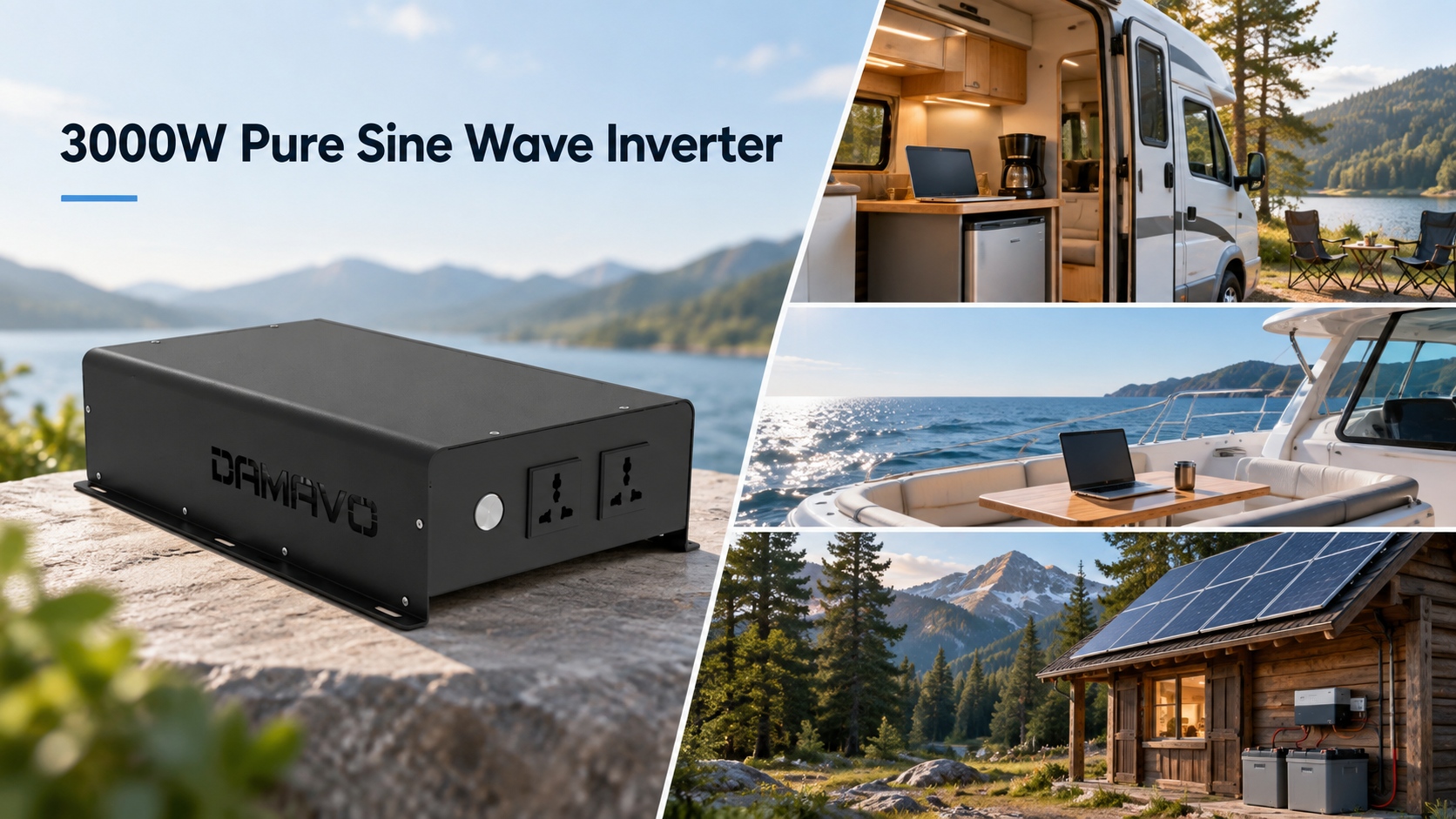
1. What Does a Pure Sine Wave Inverter 3000W Do?
In simple terms, the inverter takes DC power from a battery and changes it into AC power.
Pure sine wave output is close to the AC power used in homes. This makes it suitable for many devices that may not work well with a rougher waveform.
You may use it with:
- TVs
- Laptops
- Refrigerators
- Microwaves
- Battery chargers
- Fans
- Pumps
- Power tools
- Small motors
It is also suitable for sensitive equipment. The more advanced the electronics are, the more sensitive they may be to power quality. Many devices with control boards, motors, or sensitive electronics prefer clean sine wave power.
A 24V pure sine wave inverter is similar, but it gets its power from a 24V battery bank. The AC output still has to match the connected equipment.
2. Running Power Is Not the Same as Startup Power
This is where many sizing mistakes happen.
Suppose a pump uses 800W after it starts. It looks like a 3000W inverter is more than enough. However, the pump may draw two or three times that power for a second when starting.
The same issue can appear with:
- Refrigerators
- Air conditioners
- Water pumps
- Compressors
- Power tools
- Motors
So do not look only at the normal wattage.
Check two numbers:
Running watts show the power the equipment uses during normal operation.
Startup watts show the power needed during the short startup phase.
If the inverter cannot handle this short surge, the device may not turn on at all, even if its running wattage looks low.

3. What Can a 3000W Inverter Power in an RV or Truck?
In a large RV or truck, many loads can be covered by this type of inverter.
Here are a few examples:
- Laptop: 50–100W
- TV: 60–150W
- Refrigerator: about 100–500W
- Coffee maker: 800–1500W
- Microwave: 1000–1800W
- Chargers and small tools
The bigger question is what runs at the same time.
A microwave may work without a problem. A coffee maker may also work. Turn both on together, though, and the total load can rise quickly.
That is why it helps to think about real use instead of looking at each appliance one by one.
For vehicle systems, battery size, cable length, fuse protection, airflow, and mounting space also need attention.
4. Why Do Many High-Power Systems Use 24V?
A 24V pure sine wave inverter can make sense when the power level starts to rise.
The reason is current.
At about 3000W:
3000W ÷ 12V = about 250A
3000W ÷ 24V = about 125A
These are simple figures and do not include inverter loss, but they show the difference clearly.
Lower DC current can make cable design easier and may reduce voltage drop.
That does not mean a 24V system needs less care. You still need the right cable size, fuse protection, battery bank, and ventilation.
Most importantly, the battery voltage and inverter input voltage must match.
5. What About Marine Use?
On a boat, a 3000W inverter can be useful for more than just small electronics.
It may power:
- Marine refrigerators
- TVs
- Laptop chargers
- Battery chargers
- Coffee makers
- Small kitchen appliances
- Water pumps
- Entertainment equipment
- Boat installations bring a few extra problems.
There is moisture, vibration, heat, and often very little installation space. A dry location with good airflow is usually the better choice.
Keep the DC cable run as short as practical as well. Long cables can increase voltage drop, especially when the inverter is working hard.

6. Pure Sine Wave Inverter 3000W in an Off-Grid System
A pure sine wave inverter 3000W can be used in a cabin, solar system, or backup power setup.
It may be enough to run lights, a refrigerator, freezer, computer, pump, or small tools.
But the inverter does not make up the entire system.
A large inverter connected to a small battery bank will not run for very long. Charging is also important. If the solar array or charger cannot replace the energy you use, the battery will gradually run down.
So a 3000W inverter does not mean that you actually have 3000W available all day long.
The size of the battery bank helps determine how long the system can run.
7. Can It Run Motors and Pumps?
It can, but this is where you need to look more closely.
Motors are often easy to run once they are up to speed. Starting them is the harder part.
This also explains why the term single phase motor inverter can be misleading.
A pure sine wave inverter can provide AC power to some single-phase motors. A dedicated motor inverter or VFD does something different. It may also control motor speed, frequency, acceleration, or torque.
If the motor only needs a fixed AC supply, a pure sine wave inverter may be enough.
Before making that decision, check:
- Motor voltage
- Frequency
- Running power
- Startup current
For pumps and motors, startup demand is usually the number that deserves the most attention.
8. A Simple Way to Size the Inverter
You do not need a complicated formula for a first check.
Make a list of the equipment you think you will be using.
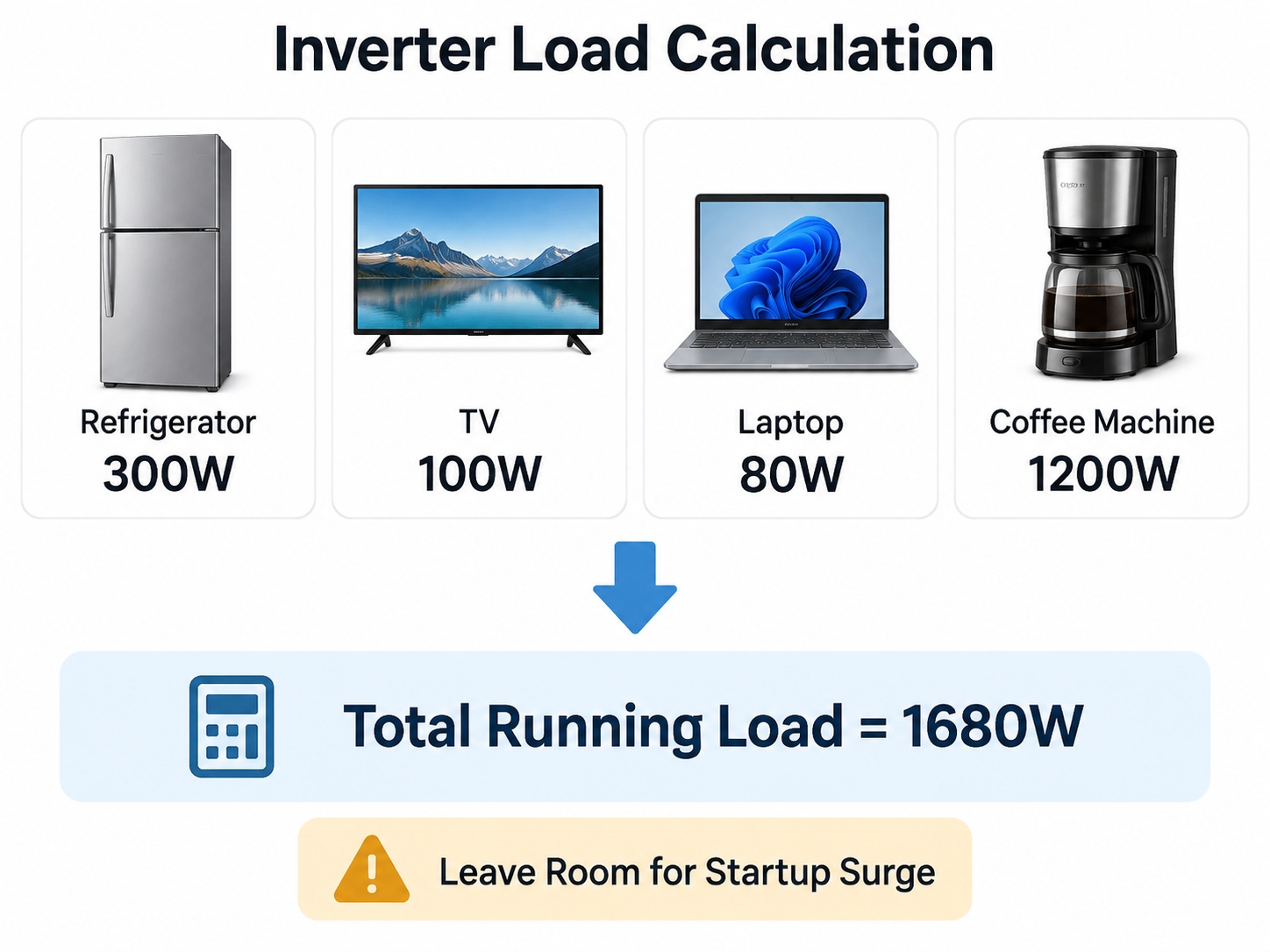
For example:
Refrigerator: 300W
TV: 100W
Laptop: 80 W
Coffee machine: 1200W
The running total is:
300 + 100 + 80 + 1200 = 1680W
In theory, a 3000W inverter has a spare.
But let‘s say, though, the refrigerator compressor begins to run while you have the coffee maker on. The instantaneous load is going to increase.
That‘s why its good to leave a bit of headroom.
9. What Should You Check Before Buying?
Power rating is only one item on the list.
Before choosing a pure sine wave inverter 3000W, check:
- DC input voltage
- AC output voltage
- Output frequency
- Continuous power
- Surge power
- THD
- Efficiency
- Cooling
- Protection functions
- Product testing
- Installation size
For OEM projects, wiring, connectors, housing, communication needs, and the working environment may also matter.
The inverter must fit the whole system, not only the largest appliance.
Conclusion
A pure sine wave inverter 3000W can supply many common loads in RV, marine, vehicle, and off-grid systems.
It may power electronics, household appliances, pumps, tools, and some electric motors.
The main things to check are startup power, battery voltage, total load, and installation conditions.
A 24V pure sine wave inverter can be useful in higher-power systems because it reduces DC current compared with a 12V system at the same output power.
For motor loads, first decide whether you only need AC power or a true single phase motor inverter with motor-control functions.
FAQs
What can a 3000W pure sine wave inverter run?
It depends what‘s being used. Typical things that can be powered include TVs, computers, the fridge, coffee machines, pumps and some power tools.
Will a 3000W inverter run a refrigerator?
Yes for most of the time, as a refrigerator generally has a low running load, but the compressor can draw more current when it starts.
Should I go for 24 V or 12 V?
In higher power systems 24 V could be advantageous because the DC current is less; but as always it still depends on the system of batteries.
Is it possible for a pure sine wave inverter to operate a single phase motor?
Yes, sometimes. The inverter has to conform to the motor voltage, frequency, run power, start-up requirements.
How to Choose the Right Boat Switch Panel for Marine Electrical Systems
Magnetic Wireless Car charger: How does Fast charging influence a Magnetic Car charger
Related Article
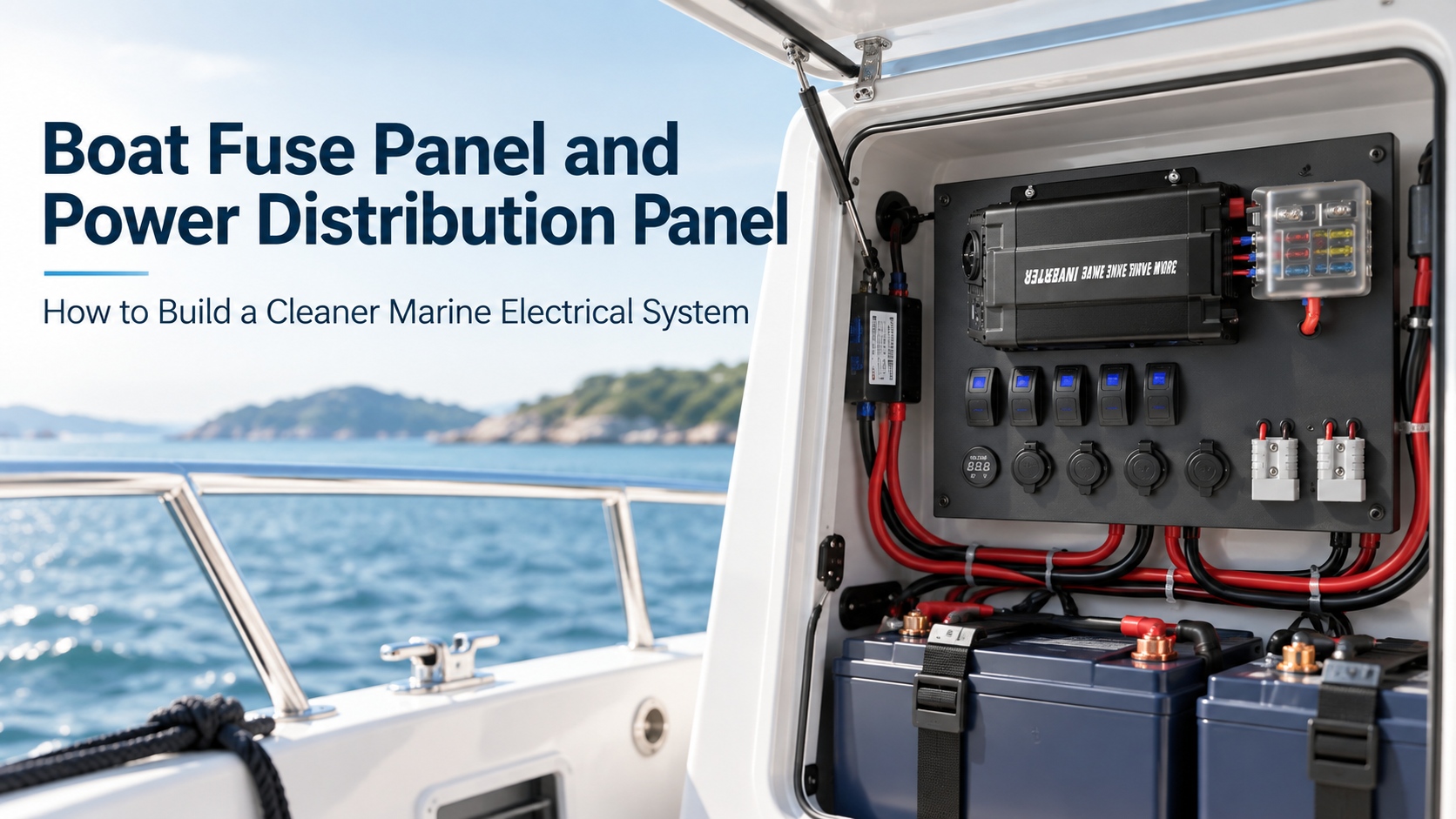
Learn how a boat fuse panel, marine switch panel, and power distribution panel work together to create a cleaner and more organized marine electrical system. This guide covers circuit protection, power distribution, switch control, voltage ratings, wiring layout, and OEM customization.
Boat Fuse Panel and Power Distribution Panel How to Build a Cleaner Marine Electrical System
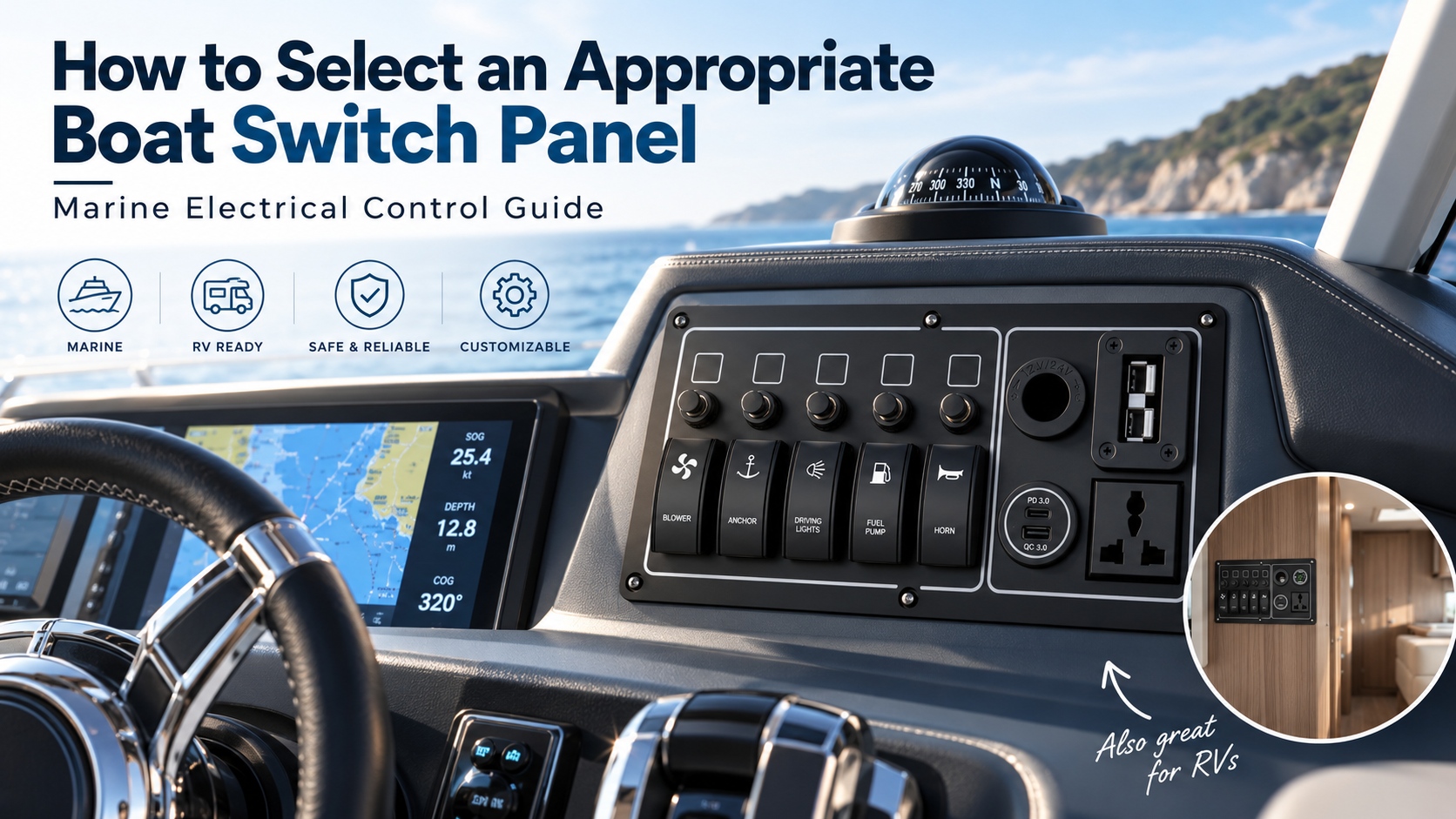
Learn how to choose the right boat switch panel for marine electrical systems. This guide covers voltage, rocker switch panel options, waterproof protection, current load, installation, USB charging, and OEM marine switch panel customization.
How to Choose the Right Boat Switch Panel for Marine Electrical Systems

Learn how charging power, coil alignment, heat, mounting position, and magnetic strength affect a magnetic wireless charger in vehicle use. This guide also explains what OEM buyers should check when choosing a magnetic car charger.
Magnetic Wireless Car charger: How does Fast charging influence a Magnetic Car charger
Here is a short, punchy description perfect for an independent website:
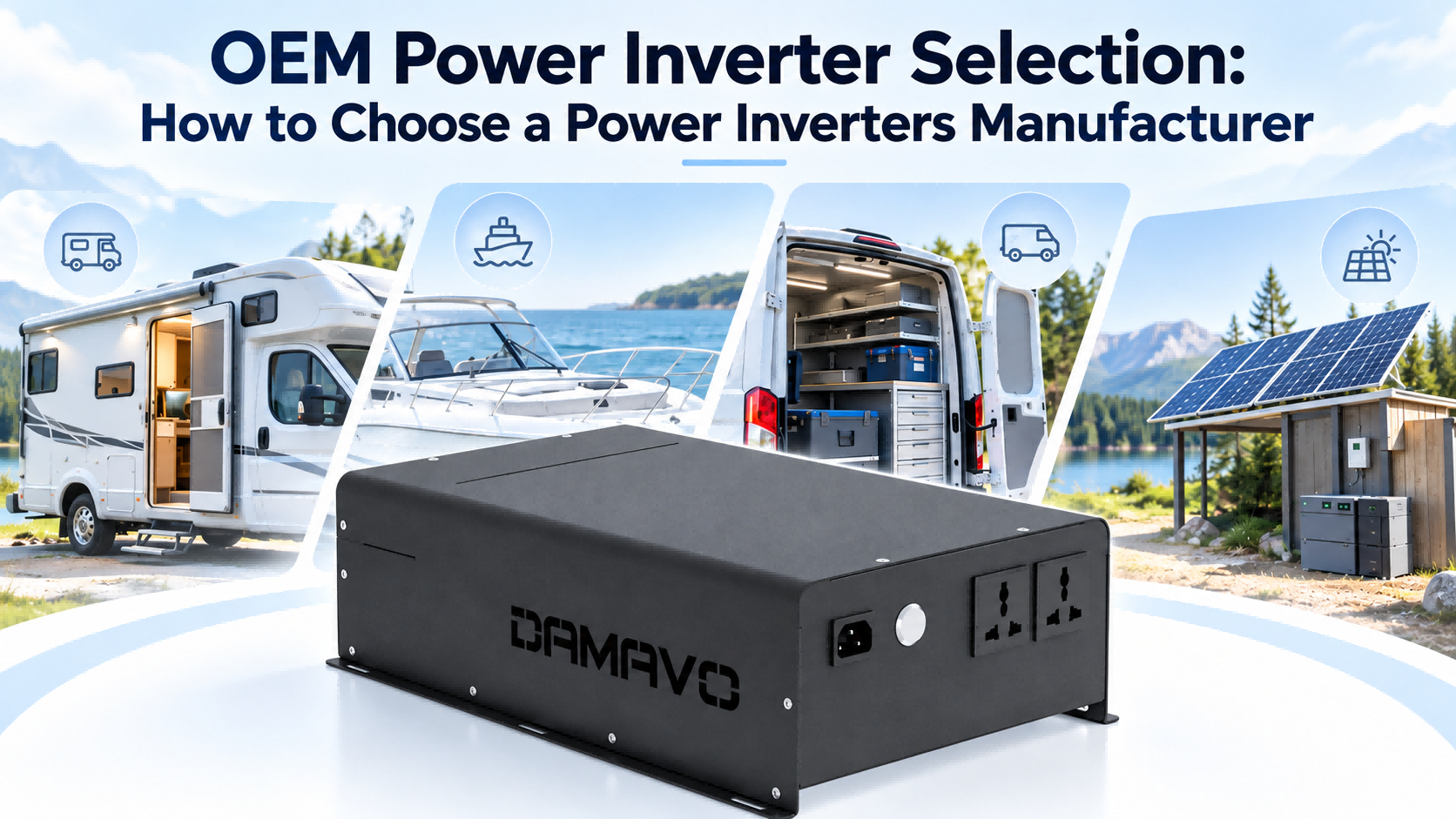
This guide explores the essentials of selecting OEM power inverters, covering critical factors like waveform, voltage, and surge power. It highlights the importance of partnering with a manufacturer that offers robust engineering support, in-house PCBA production, and strict quality control to ensure reliable, stable mass production.
This guide explores the essentials of selecting OEM power inverters, covering critical factors like waveform, voltage, and surge power. It highlights the importance of partnering with a manufacturer that offers robust engineering support, in-house PCBA production, and strict quality control to ensure reliable, stable mass production.
OEM Power Inverter Selection: How to Choose a Power Inverters Manufacturer