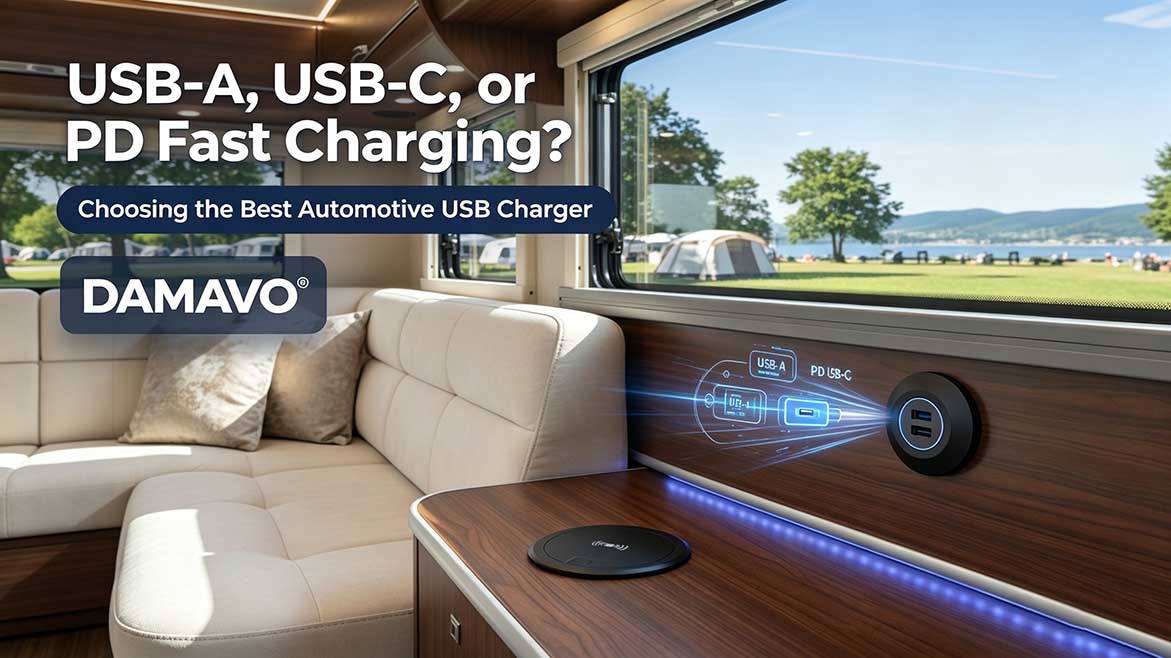
USB-A, USB-C, or PD Fast Charging? Choosing the Best Automotive USB Charger
Key Takeaways
-
USB-A remains a reliable option for basic charging and legacy devices.
-
USB-C offers higher efficiency, improved convenience, and broader device compatibility.
-
PD fast charging delivers faster charging for smartphones, tablets, and laptops.
-
Commercial vehicles, RVs, and industrial equipment are increasingly adopting USB-C and PD solutions.
-
For new projects, USB-C and PD generally provide better long-term compatibility than USB-A.
Which Automotive USB Charger Should You Choose?
If your project needs to support many older devices, USB-A is still a practical option. For compatibility with today's mainstream electronics, USB-C is usually the better choice. And if you need fast charging, higher power, and future-ready design, DAMAVO® recommends USB-C PD chargers.
Here’s a quick guide to choosing the right solution:
-
Basic charging needs → USB-A
-
Compatibility with both old and new devices → USB-A + USB-C
-
Fast smartphone charging → USB-C
-
Tablet charging → USB-C
-
Laptop charging → USB-C PD
-
Commercial vehicle projects → USB-C PD
-
Future-proof vehicle platforms → USB-C PD
Understanding Today's Automotive USB Charging Technologies
Before comparing charging options, it helps to know what USB-A, USB-C, and PD actually mean. Many people use "USB-C" and "PD" as if they're the same, but they're actually different technologies. Understanding the difference will help you make a better decision for your project.
What Is USB-A?
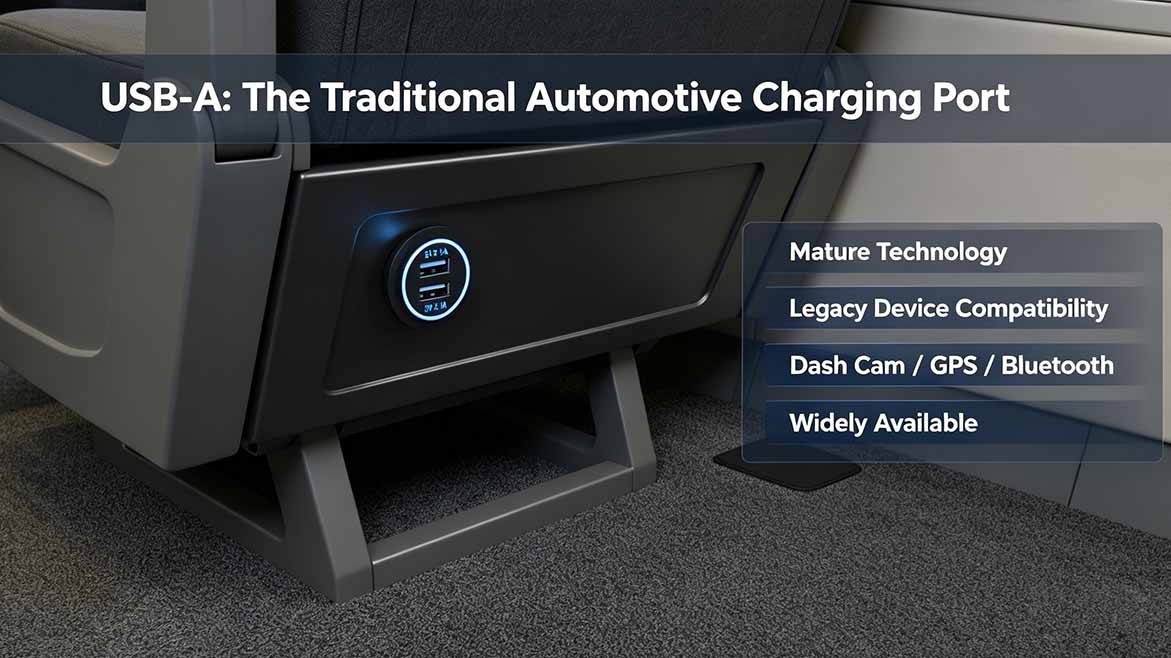
USB-A is the traditional USB connector that has been widely used for decades. It's still one of the most common charging ports in vehicles and electronic devices.
Key advantages include:
-
Mature and proven technology
-
Lower implementation cost
-
Broad compatibility with legacy devices
-
Widely available accessories
In automotive applications, USB-A is still commonly used for:
-
Dash cameras
-
GPS navigation systems
-
Bluetooth adapters
-
Basic smartphone charging
What we've seen at DAMAVO® is that a lot of industrial and automotive equipment still come with USB-A ports car charger. So even though USB-C is on the rise, USB-A isn't going anywhere—it's going to be around for many years to come.
What Is USB-C?
USB-C is the latest generation of USB connector technology.
Compared with USB-A, USB-C offers:
-
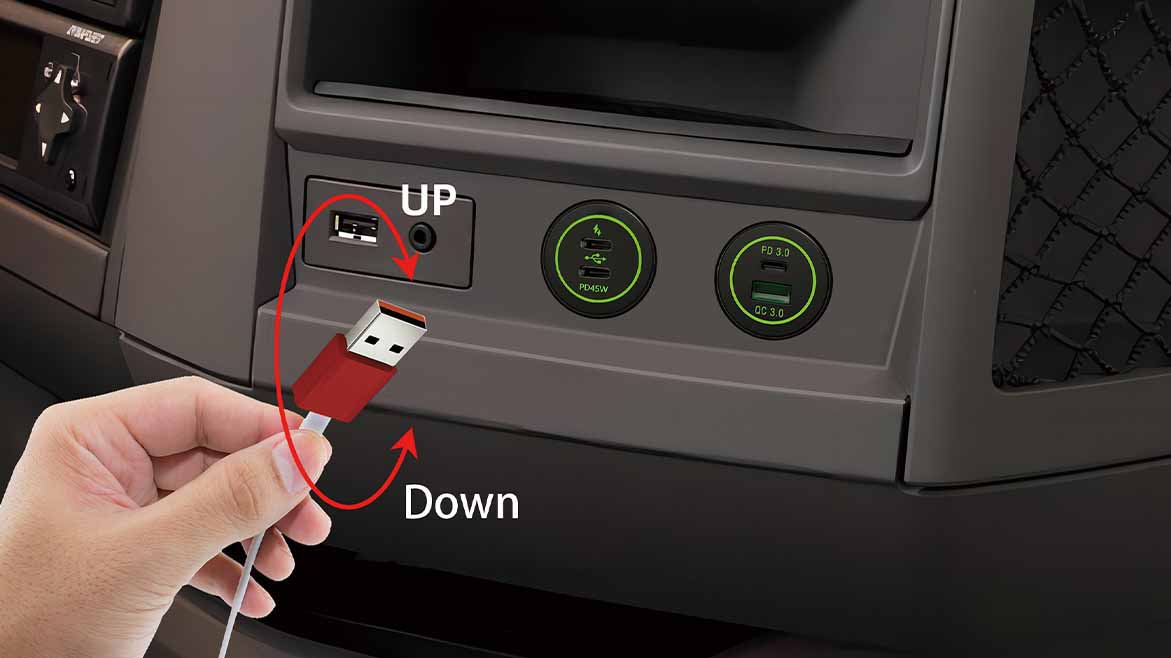
Reversible plug orientation
-
Higher current capacity
-
Faster data transfer capabilities
-
Better long-term compatibility
If you buy a new phone, tablet, or most other portable electronics today, chances are it comes with a USB-C charging port—it's become the new standard.
If you're designing a product intended to remain competitive for several years, USB-C is often the safer choice.
What Is USB Power Delivery (PD)?
Power Delivery (PD) is a fast-charging protocol rather than a connector type.
PD is typically used with USB-C ports, and it allows devices to "talk" to the charger and ask for more power when needed.
PD charging is commonly used for:
-
Premium smartphones
-
Tablets
-
Industrial handheld terminals
-
Laptops
With more people working on the go, PD fast charging car charger is fast becoming a must-have in today's vehicle charging systems.
Why Are USB-C and PD Often Confused?
The distinction is simple:
-
USB-C is a connector.
-
PD is a charging protocol.
Not every USB-C port supports PD fast charging.
Here's a good example: not all USB-C ports are the same. One port might just trickle-charge your device, but another with PD can power it up fast—your phone or laptop will be ready to go in a fraction of the time.
When evaluating an automotive USB charger, it's important to verify both the connector type and the charging protocol.
USB-A vs USB-C vs PD: What Are the Key Differences?
Now that we've covered the basics, let's compare how these technologies differ in practice. This can help engineers, product managers, and buyers decide which option suits their needs best.
Here’s a quick comparison of the three technologies:
| Comparison | USB-A | USB-C | USB-C PD |
| Best For | Legacy devices | Everyday modern devices | High-power and fast charging |
| Connector | Rectangular | Reversible USB-C | Reversible USB-C |
| Charging Speed | Standard | Fast | Fastest |
| Power Capability | Low | Medium–High | Highest |
| Typical Devices | GPS, dash cams, older phones | Smartphones, tablets | Smartphones, tablets, laptops |
| Future Compatibility | Good for existing systems | Future-ready | Most future-proof |
From an industry perspective, USB-C and PD are becoming the preferred choices for new vehicle platforms.
At DAMAVO®, we've seen significantly increased demand for USB-C and PD solutions, particularly in commercial vehicles, premium equipment, and industrial applications.
Which Charging Technology Is Best for Different Devices?
Not all devices have the same charging requirements. Understanding the power needs of your target devices can help you select the right automotive USB charger.
Smartphones
For everyday smartphone charging:
-
USB-A can handle basic charging needs.
-
USB-C offers improved charging efficiency.
-
PD is ideal for smartphones that support fast charging.
If users often use navigation, video calls, or productivity apps, faster charging can make a real difference.
Tablets
Tablets typically have larger batteries than smartphones.
Using a traditional USB-A charger may result in slower charging times.
USB-C and PD can significantly improve charging performance and user convenience.
GPS Devices and Dash Cameras
These devices generally consume relatively little power.
In most cases, USB-A remains enough for their charging requirements.
This is one reason why many commercial vehicles continue to include USB-A ports.

Industrial Terminals and Laptops
Modern vehicles increasingly support mobile offices and connected work environments.
When charging industrial tablets, rugged handhelds, or laptops, PD fast charging is often a must-have.
If you're dealing with high-power devices, a USB charger with PD is typically your best bet.
How to Choose an Automotive USB Charger for Different Vehicle Types
Device requirements are only part of the equation. Vehicle type also plays a major role in determining the ideal charging solution.
Passenger Vehicles
For passenger cars and SUVs, USB-C is quickly becoming the standard.
If budget permits, combining USB-C with PD charging offers a better user experience and keeps the product relevant longer.
Commercial Trucks
Truck drivers often rely on:
-
Smartphones
-
Tablets
-
Fleet management terminals
-
Navigation systems
As a result, fast and reliable charging is increasingly important.
From our experience at DAMAVO®, more fleet operators are specifying USB-C PD charging modules to support driver productivity and connected vehicle technologies.
RVs and Camper Vans
RV users frequently charge many devices simultaneously.
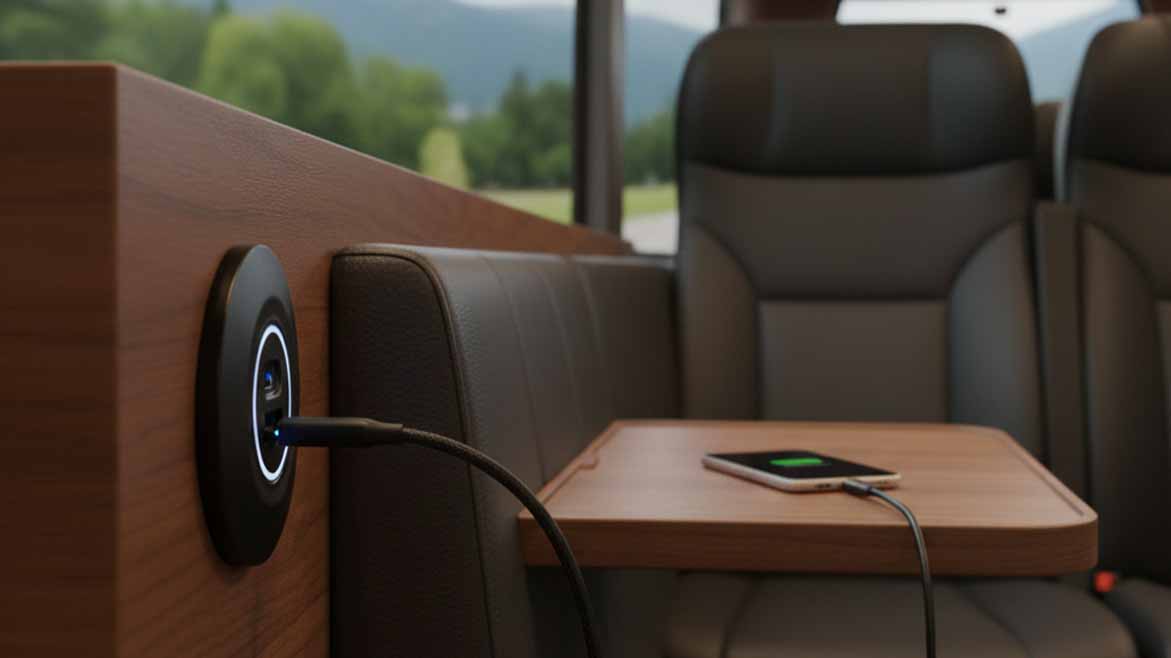
Dual USB-C or USB-C PD car charger solutions are well suited for travel, remote work, and outdoor lifestyles.
Construction and Agricultural Equipment
These vehicles often operate on 12V or 24V electrical systems and work in demanding environments.
When selecting an automotive USB charger for these applications, consider factors such as:
-
Wide voltage input capability
-
Vibration resistance
-
Dust protection
-
Temperature tolerance
Durability is just as important as charging performance.
How Does Fast Charging Affect Vehicle Electrical Systems?
As charging power increases, vehicle electrical systems must handle greater energy demands. This makes proper charger design and integration increasingly important.
Increased Power Requirements
PD fast charging supports significantly higher power output.
This requires efficient power conversion to cut energy loss and maximize reliability.
Greater Thermal Management Demands
Higher power levels generate more heat.
A good automotive USB charger should have effective thermal management to keep it running at safe temperatures.
Enhanced Electrical Protection
Modern automotive USB chargers often incorporate many safety protections, including:
-
Overload protection
-
Over-temperature protection
-
Short-circuit protection
-
Reverse polarity protection
These safeguards help protect both connected devices and vehicle electrical systems.
Future Trends: Is USB-C PD Becoming the New Standard?
Vehicle charging technology continues to evolve alongside advancements in consumer electronics.
Several trends are accelerating the adoption of USB-C and PD charging:
-
Increasing device power requirements
-
Rapid growth of the USB-C ecosystem
-
Rising demand for mobile work environments
-
Greater user expectations for fast charging
-
New vehicle platforms reducing USB-A ports
At DAMAVO®, we believe USB-A will remain relevant for certain legacy applications. However, for new vehicle programs and product developments, USB-C and PD have become the preferred path forward.
If you want your product to stay competitive for the next five years or more, adopting USB-C and PD today is usually the smartest long-term move.
Conclusion: Which Automotive USB Charger Is Right for Your Project?
At DAMAVO®, we recommend selecting charging technology based on your users, devices, and future product plans. USB-A remains useful for legacy equipment, while USB-C and USB-C PD provide the performance and flexibility needed for modern automotive applications.
Power Inverters Manufacturer Guide: How to Choose the Right Supplier for Vehicles and Equipment
OEM Automotive USB Charger Solutions: Custom Charging Systems for Vehicle Manufacturers
Related Article