Power Inverters Manufacturer Guide: How to Choose the Right Supplier for Vehicles and Equipment
Choosing the right power inverters manufacturer is about more than price, power rating, or product appearance. For trucks, RVs, agricultural machines, construction equipment, forklifts, and other vehicles, an inverter must work well under real operating conditions.
- Check whether the manufacturer has real R&D and engineering capabilities.
- Look at testing and quality control, not only certifications.
- Match the inverter to your voltage, power, load, and working environment.
- Decide whether a standard product or OEM/ODM solution is better.
- Evaluate manufacturing, delivery, and technical support together.
How Can You Tell if a Power Inverters Manufacturer Is Reliable?
When you start looking for a power inverter manufacturer, it is easy to focus on a product list and a quotation first. We recommend looking one step further: Can this company support your project from development to production?
A reliable manufacturer should be able to explain not only what products it offers, but also why a certain inverter is suitable for your application.
Look at R&D and Engineering Capability
If your project has special requirements for voltage, power, size, connectors, or installation, engineering capability becomes very important.
In our view, a real manufacturer should be able to support the full process, including electrical design, PCB design, structural design, software development, prototype building, and product testing.
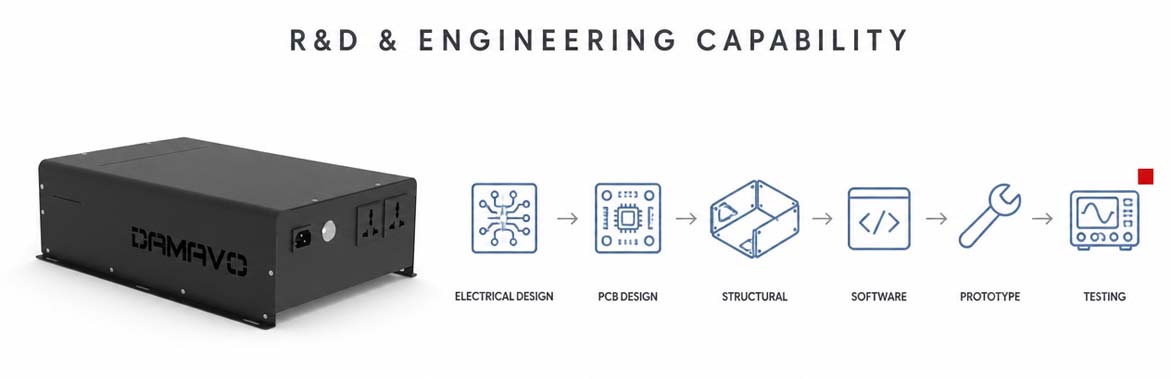
This is one important difference between a manufacturer and a company that mainly sells existing products.
Check Testing and Quality Control
An inverter installed in a vehicle or machine may face vibration, heat, moisture, dust, and long working hours. Because of this, you should ask what happens before the product is shipped.
Functional testing, aging testing, temperature testing, vibration testing, and final inspection can tell you much more about product reliability than a simple product datasheet.
How Do You Choose the Right Inverter for Vehicles and Equipment?
We often hear the first question: “How many watts do I need?”
Power rating is important, but it is only one part of the decision. A suitable inverter should also match your battery system, load type, installation space, and operating environment.
Check Input and Output Requirements
First, confirm whether your system uses 12V, 24V, or 48V DC input. Then check the required AC output voltage, frequency, rated power, and peak power.
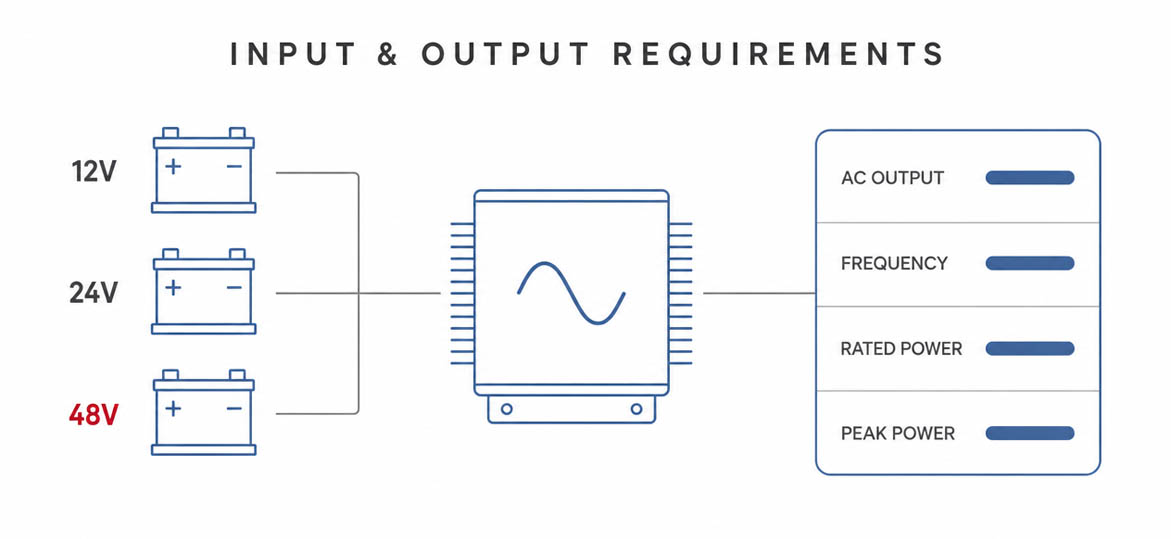
For example, equipment with motors, pumps, compressors, or other loads with high starting current may need more surge power than the normal running load.
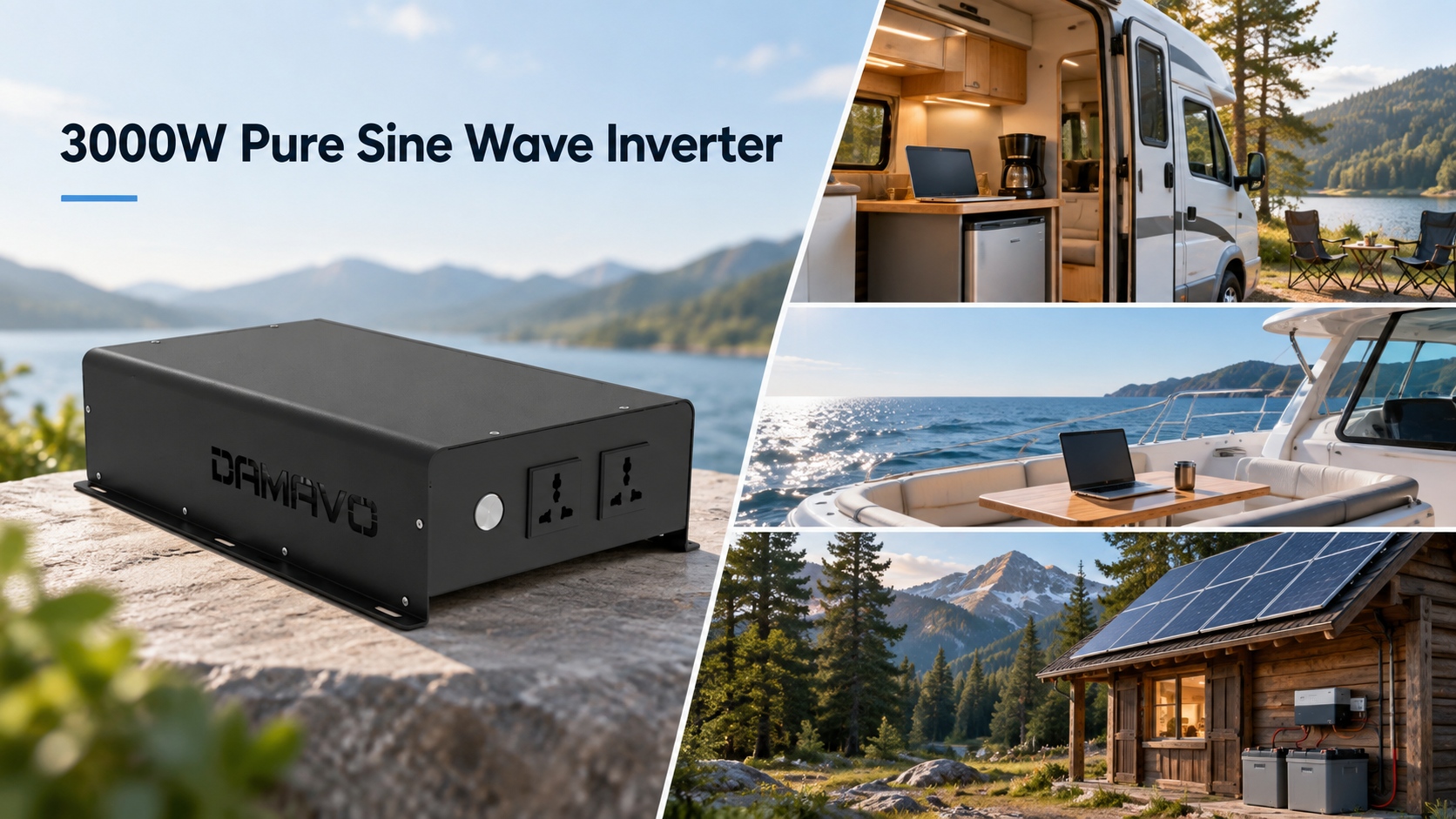
For different applications, you can also compare Pure Sine Wave Inverter and other inverter options based on your load and system requirements.
Do Not Ignore the Installation Environment
For trucks, agricultural machinery, construction equipment, and forklifts, installation conditions can be just as important as electrical specifications.
You may need to consider:
- Available installation space
- Cooling and airflow
- Vibration
- Dust and moisture
- Working temperature
- Cable and connector location
At DAMAVO®, we normally look at these factors together instead of selecting a product only by wattage.
Should You Choose a Standard Inverter or an OEM/ODM Solution?
A standard inverter is often the better choice when an existing model already matches your application. It can reduce development time and help your project move faster.
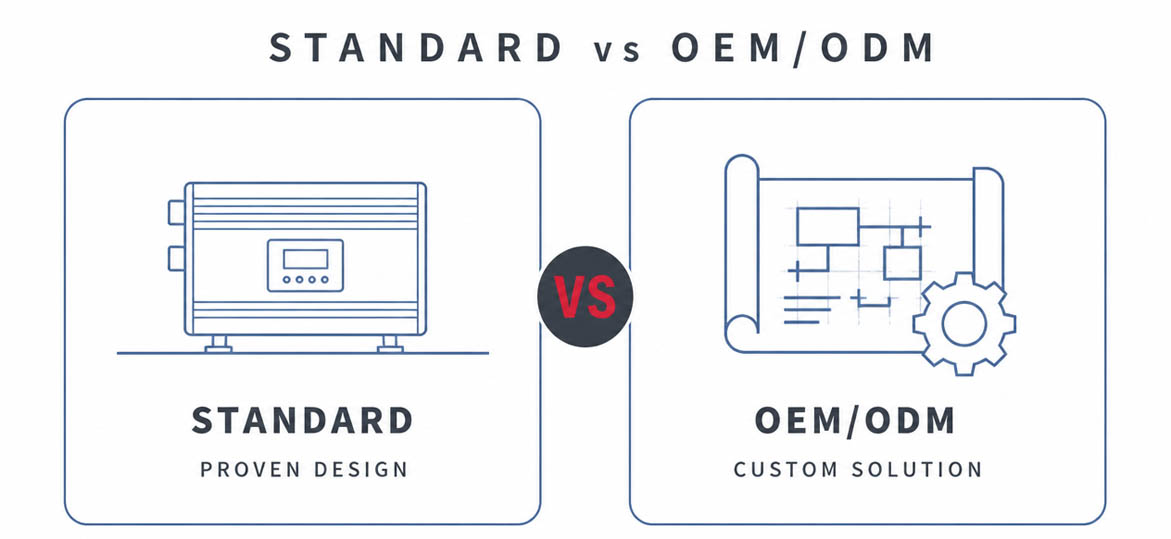
However, custom development may make more sense when you have special requirements for input voltage, output power, housing size, connectors, installation method, protection functions, or other system details.
How We Normally Make This Decision
At DAMAVO®, we first look at your real application and then decide whether customization is necessary.
If an existing product already meets your requirements, we prefer to start with a proven design. If it does not, we can evaluate whether electrical, structural, software, or appearance changes are needed.
For example, a modified sine wave design may be suitable for some basic loads, while a pure sine wave solution may be a better fit for sensitive electronics or certain motor-based applications. You can also review our Modified Sine Wave Inverter options when comparing different solutions.
How Do You Know if a Manufacturer Can Support Mass Production?
A good sample does not always mean good mass production.
Once your project moves from prototype to regular production, you need to think about material control, production processes, functional testing, aging tests, final inspection, and batch consistency.
We believe a capable OEM power inverters manufacturer should be able to support the full process:
Requirement → Design → Prototype → Validation → Pilot Production → Mass Production
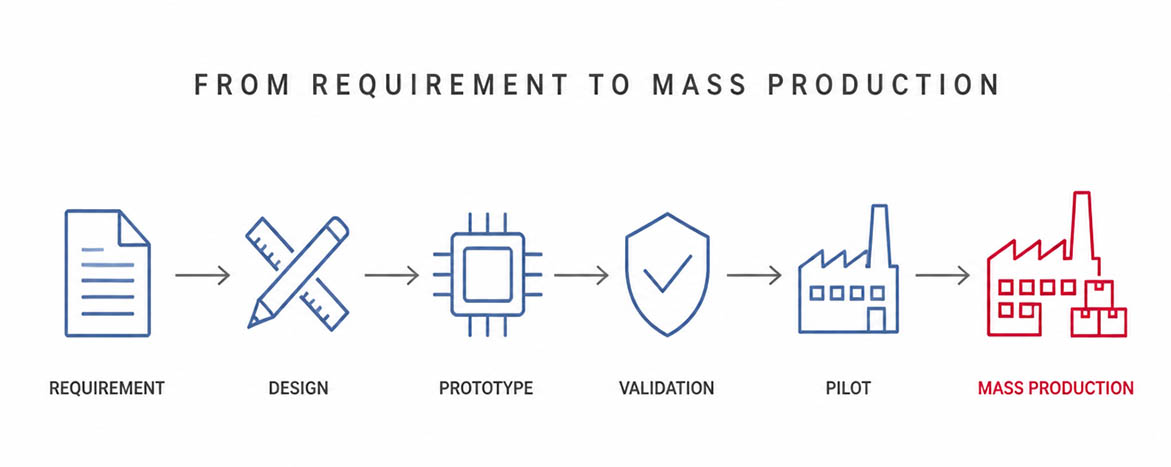
This complete process helps reduce the risk of large differences between the first sample and later production batches.
Why Choose DAMAVO® as Your Power Inverter Manufacturing Partner?
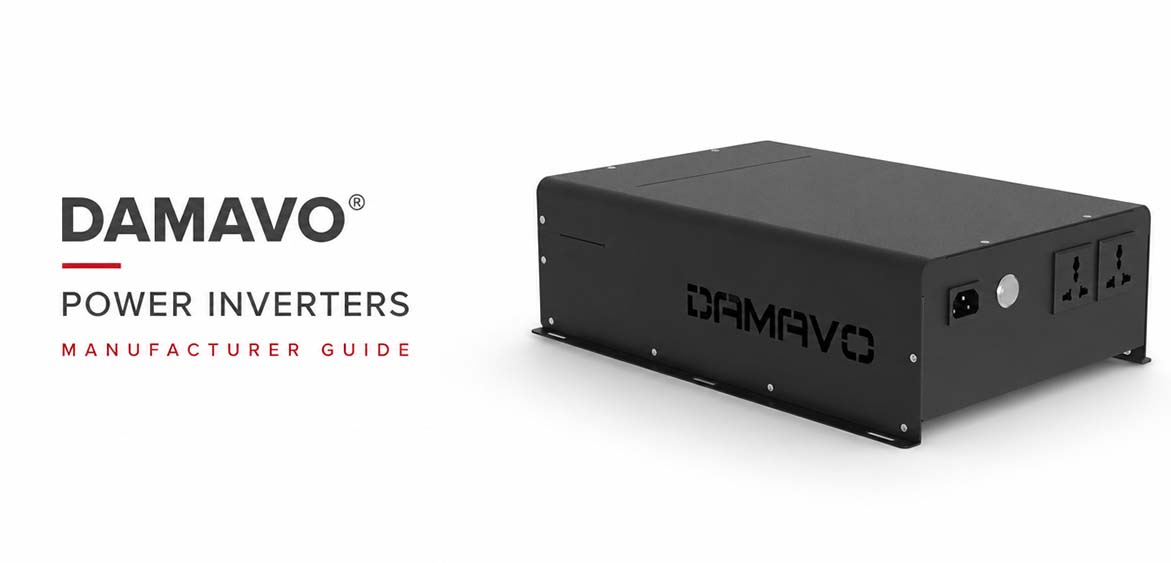
DAMAVO® focuses on power and lighting solutions and supports vehicle and equipment applications from product design and rapid prototyping to validation and mass production.
We do not believe that every project needs a completely new inverter. Sometimes a proven standard product is the best choice. In other cases, a custom solution can better match your electrical system, installation space, or application conditions.
Our goal is to understand your requirements first and then recommend the right path.
You can also explore DAMAVO® power inverter solutions to see our broader product range and available configurations.
Where Should You Start When Choosing a Power Inverters Manufacturer?
If you are developing a new vehicle or equipment project, start with a few basic details: input voltage, output voltage, required power, load type, installation space, and working environment.
The clearer these requirements are, the easier it is to determine whether you need a standard inverter or an OEM/ODM solution.
In our experience, the best way to choose a power inverters manufacturer is to start with the real application, not just the product catalog. A good manufacturing partner should help you find a solution that works not only on paper, but also in the vehicle or equipment where it will be used.
Power Inverters Selection Matrix: How to Choose the Right Inverter for Your Application
USB-A, USB-C, or PD Fast Charging? Choosing the Best Automotive USB Charger
Related Article