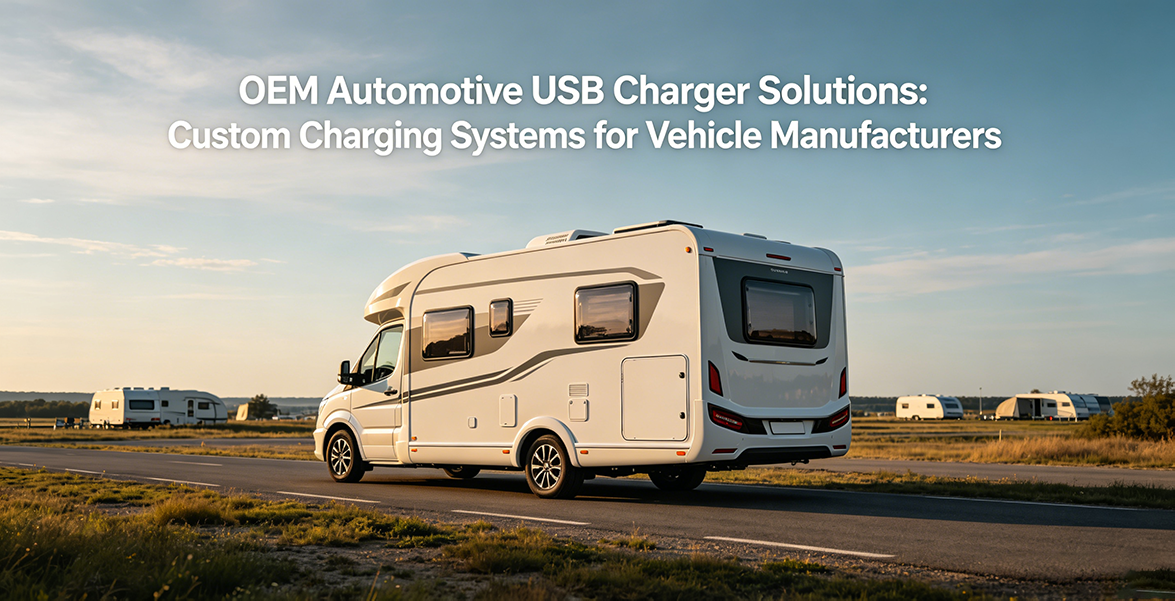
OEM Automotive USB Charger Solutions: Custom Charging Systems for Vehicle Manufacturers
If you're developing a new vehicle platform, upgrading in-cabin charging capabilities, or sourcing a reliable charging solution for commercial vehicles or industrial equipment, an OEM automotive USB charger can provide the flexibility and performance your project requires. This guide explains how custom vehicle charging systems are developed, what customization options are available, and what manufacturers should consider when selecting an OEM partner.
Key Takeaways
- Understand the OEM automotive USB charger development process
- Explore interface, power, branding, and design customization options
Why OEM Automotive USB Chargers Matter in Modern Vehicles
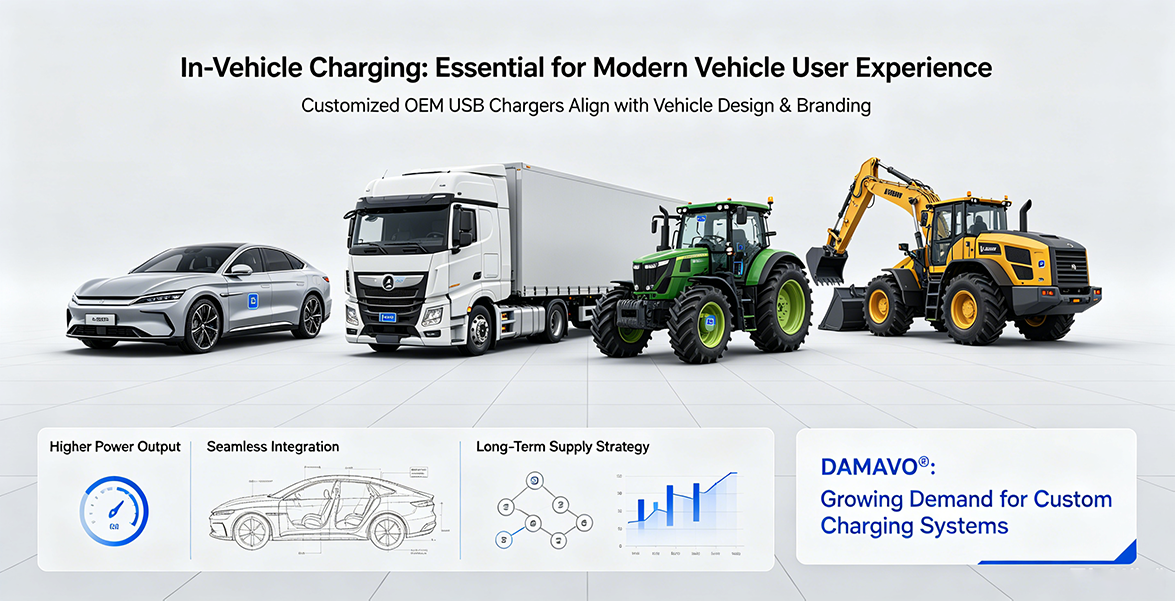
As USB-C fast charging and connected vehicle technologies become standard features, drivers expect reliable charging wherever they travel. Whether for passenger vehicles, commercial fleets, agricultural machinery, or construction equipment, charging systems now play an important role in the overall user experience.
If you're developing a new vehicle platform, charging performance directly affects customer satisfaction and perceived product quality. At DAMAVO®, we've seen growing demand for charging systems that combine higher power output, seamless integration, and long-term supply reliability.
What Is an OEM Automotive USB Charger?
An OEM automotive USB charger is designed and manufactured according to a vehicle manufacturer's specific requirements. Unlike generic aftermarket products, OEM solutions can be customized for voltage systems, charging protocols, installation environments, appearance, and branding.
This approach gives manufacturers greater flexibility while ensuring compatibility with vehicle electronics and interior design. Many companies choose customized automotive charging solutions to create a consistent experience across multiple vehicle platforms.
OEM projects are typically built around customer specifications, while ODM projects adapt existing designs to reduce development time and cost.
OEM Automotive USB Charger Development Process
Developing a reliable charging system requires more than selecting a standard product. A structured development process helps reduce engineering risks and improve long-term performance.
The process typically includes:
- Requirement analysis
- Electrical and mechanical design
- Prototype development
- Validation testing
- Mass production
During development, engineers evaluate factors such as vehicle voltage, mounting space, charging power, environmental conditions, and certification requirements.
Before production begins, products undergo testing for EMC performance, vibration resistance, temperature stability, electrical safety, and overall reliability to ensure consistent operation in demanding automotive environments.
Customization Options for Automotive USB Charging Systems
No two vehicle projects are exactly the same. Different vehicle types, user expectations, and installation environments often must customized charging solutions.
If you're planning a new vehicle program, understanding available customization options early can simplify product selection and reduce development timelines.
Interface Configuration
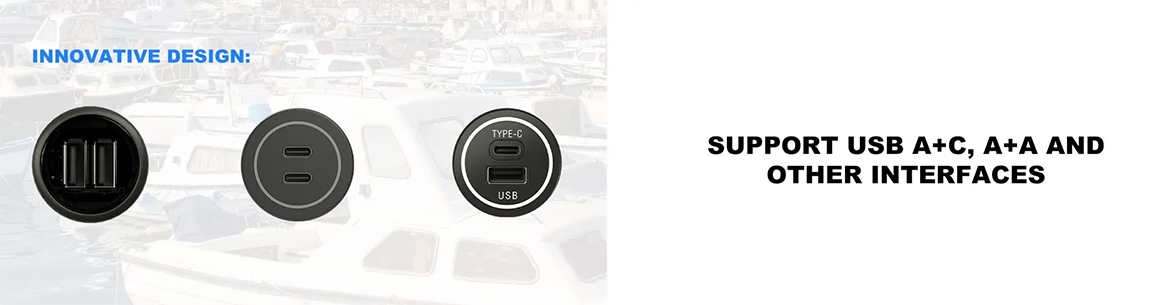
Modern automotive charging systems can support various interface combinations, including:
- USB-A
- USB-C
- Dual USB-A
- Dual USB-C
- USB-A + USB-C
- USB Power Delivery (PD)
As USB-C adoption continues to grow, many manufacturers are transitioning toward higher-performance charging architectures.
Power Output Customization
Charging power can be tailored according to application requirements.
Common configurations include:
- 18W
- 30W
- 45W
- 60W
- 100W and above
Higher-output solutions are increasingly used for tablets, industrial terminals, and professional electronic devices.
For manufacturers looking to support laptops, rugged tablets, and other power-hungry devices, a 12V USB C 65W charging solution is often an ideal balance between charging performance and vehicle electrical system compatibility. These higher-output configurations are becoming increasingly common in commercial vehicles, service fleets, and specialty equipment applications.
Housing and Appearance Design
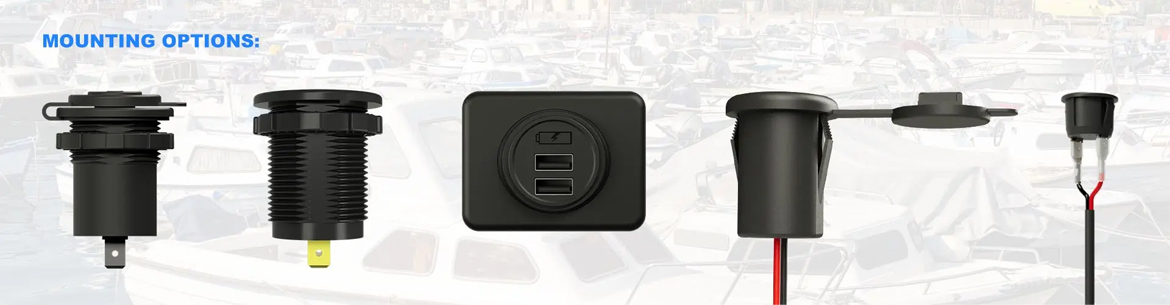
Manufacturers frequently customize:
- Housing shape
- Surface finish
- Backlighting
- Mounting configuration
- Waterproof protection
For projects that prioritize dashboard integration, a Surface Mount Car Charger design can offer a clean appearance while simplifying installation.
OEM programs may also include custom logos, labels, packaging, and documentation to maintain brand consistency.
Key Technical Features Vehicle Manufacturers Should Consider
Selecting the right charging solution involves more than comparing power ratings.
At DAMAVO®, we've found that long-term reliability and compatibility often have a greater impact on project success than peak charging performance.
Important considerations include:
- Automotive-grade electronic components
- Over-voltage protection
- Over-current protection
- Short-circuit protection
- Reverse polarity protection
- Over-temperature protection
Thermal management is also critical, especially for high-power charging systems. Effective heat dissipation helps maintain charging efficiency, prevent overheating, and extend product lifespan.
Depending on the target market, manufacturers may also require compliance with standards such as CE, RoHS, EMC, E-Mark, and REACH.
How Vehicle Manufacturers Test OEM USB Charger Partners
Choosing the right OEM partner involves much more than comparing product specifications.
Manufacturers typically evaluate suppliers based on:
Engineering and R&D Capability
Strong engineering resources are often the foundation of successful OEM projects.
Look for partners that can provide:
- Custom hardware development
- Mechanical design support
- Fast charging expertise
- Validation testing assistance
Project Management Experience
Vehicle programs often involve multiple stakeholders and tight timelines.
An experienced supplier should offer:
- Clear communication
- Structured development milestones
- Documentation support
- Change management processes
Quality Management Systems
Consistent quality is critical for long-term production programs.
Many vehicle manufacturers prefer suppliers that operate under recognized systems such as:
- ISO 9001
- IATF 16949
These systems help ensure process consistency and traceability.
Supply Chain Stability
Long-term projects require dependable material sourcing, risk management, and supply continuity to support future production needs.
Conclusion
OEM automotive USB chargers have become an essential component of modern vehicle design. As charging expectations continue to rise, manufacturers increasingly require solutions that combine performance, reliability, and seamless integration.
By understanding development processes, customization options, technical requirements, and supplier evaluation criteria, you can make more informed decisions when selecting a charging solution for your next project.
Whether you need a fully customized OEM design or a fast-track ODM solution, DAMAVO® provides automotive-grade charging solutions backed by engineering expertise, quality manufacturing, and long-term support.
USB-A, USB-C, or PD Fast Charging? Choosing the Best Automotive USB Charger
Car Rocker Switch Wiring Guide: What’s the Difference Between SPST, SPDT and DPDT?
Related Article