
How to Choose the Right Boat Switch Panel for Marine Electrical Systems
author: DAMAVO
2026-09-22
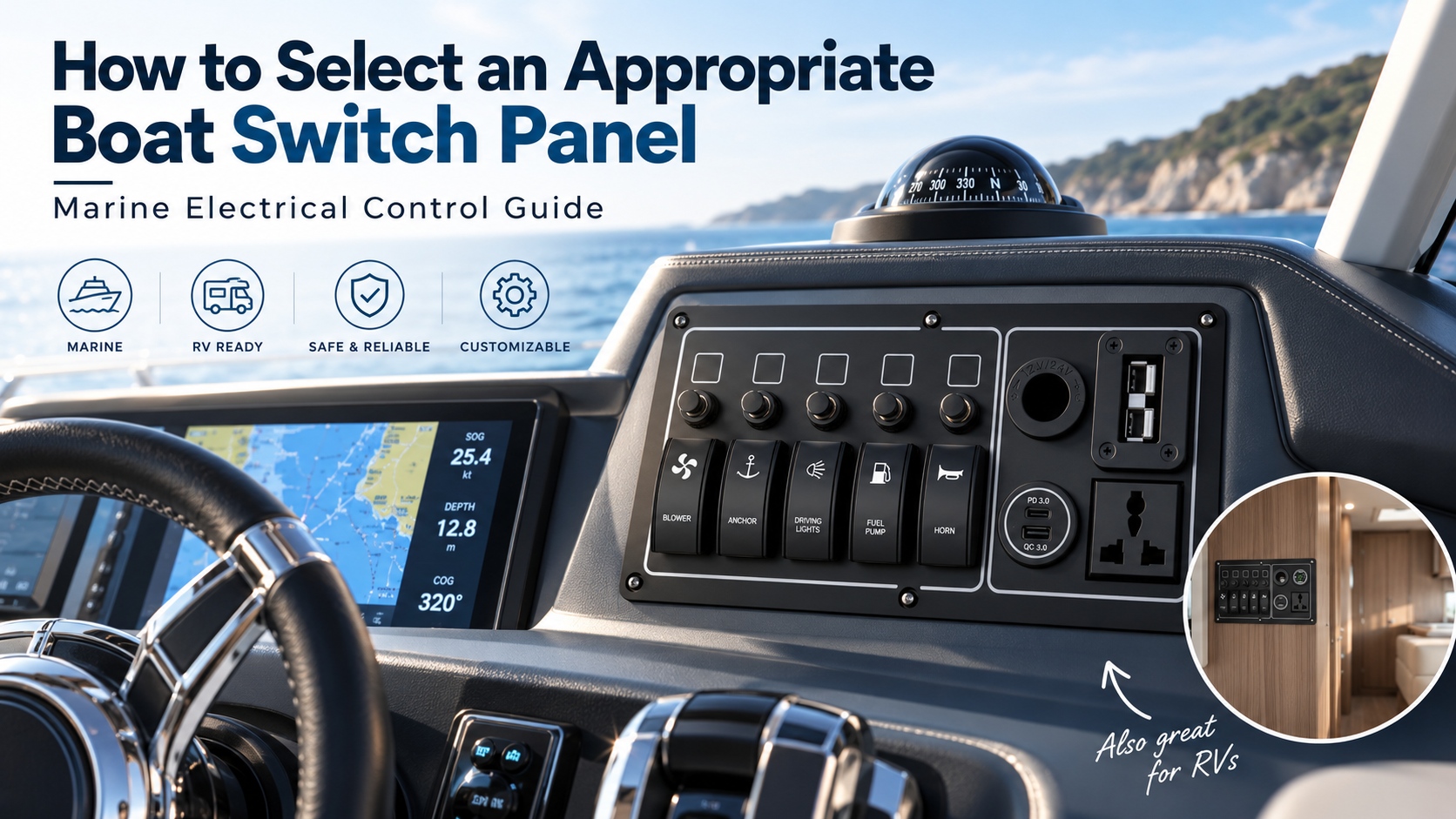
A boat switch panel is an important yet simple component of a marine electrical system. It gives users a convenient way to turn lights, pumps, fans, and other equipment on or off.
For use on a boat, the panel not only has to perform well but also has to match the boat’s electrical system, available space, and working environment.
A good marine switch panel needs to be resistant to damp, vibration, and wear from use. A panel that is too fragile may not last long and could lead to wiring problems, control issues, or extra maintenance.
This guide summarizes what to look for when choosing a rocker switch panel for boats, RVs, yachts, and other mobile applications.
So What Is a Boat Switch Panel?
A boat switch panel is a central control panel for several electrical circuits.
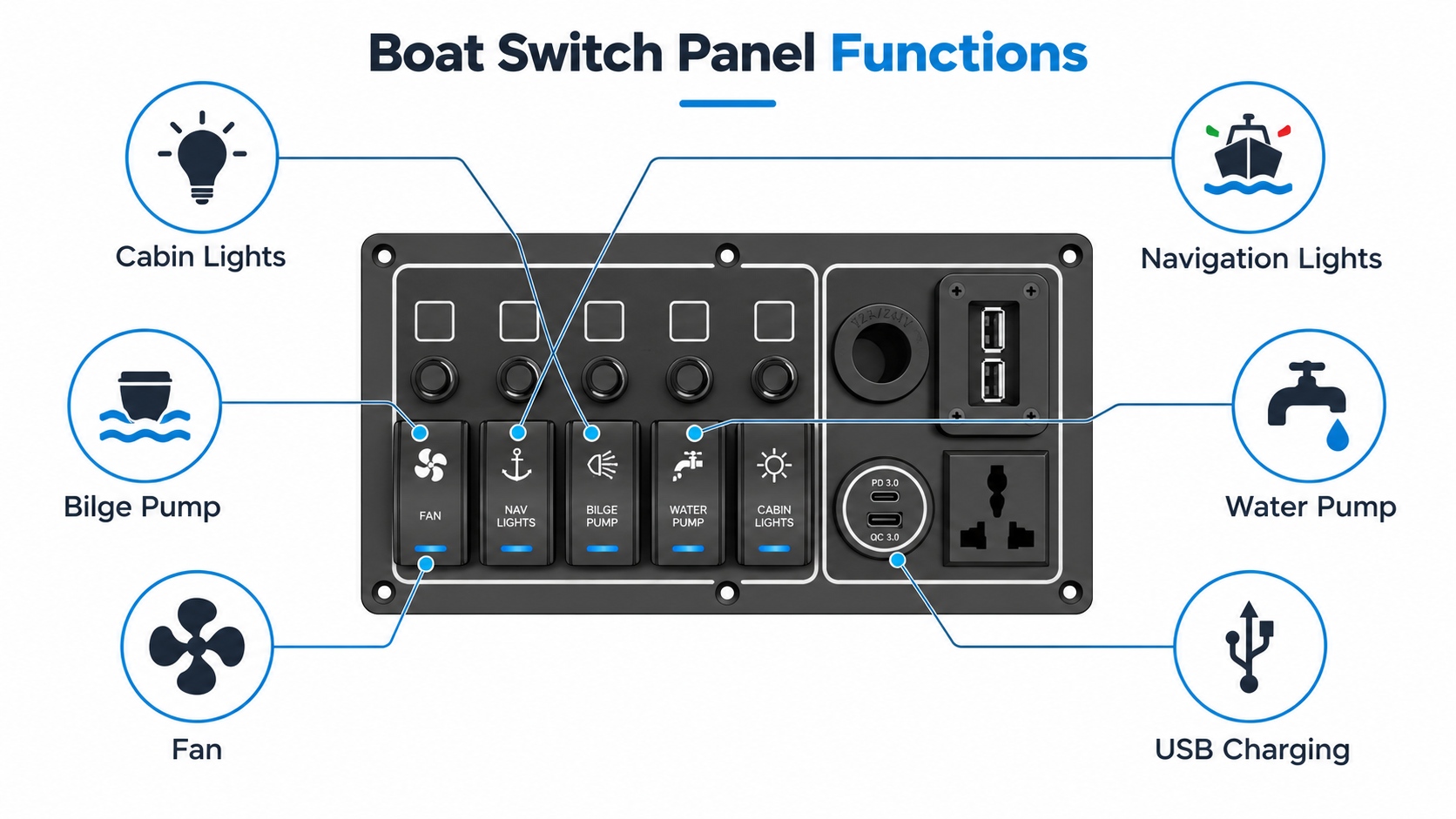
It can be used to control:
- Cabin lights
- Navigation lights
- Bilge pumps
- Water pumps
- Fans
- Deck lights
- Auxiliary equipment
- USB charging ports
Some panels also include a voltmeter, USB charger, fuse, or power socket.
This makes the system cleaner and easier to operate. Instead of installing many separate switches, users can control several functions from one panel
.
Boat Switch Panel vs. Marine Switch Panel
The terms boat switch panel and marine switch panel are often used for similar products.
The main difference is usually the application.
A marine switch panel should be suitable for humid and demanding environments. Boats may face water splash, salt air, vibration, and temperature changes.
Because of this, marine products should have better sealing, reliable electrical connections, and corrosion-resistant materials.
Why Rocker Switch Panels Are Popular
A rocker switch panel is common in boats and vehicles because it is easy to use.
Rocker switches give clear ON and OFF control. Many models also include LED indicators, so users can quickly see which circuit is active.
They are also easy to label.
For example, switches can be marked:
- LIGHT
- PUMP
- FAN
- NAV
- AUX
For OEM projects, the labels and icons can also be customized.
This makes rocker switch panels suitable for both simple and more complex electrical systems.
Check the System Voltage
Voltage should be one of the first things you check.
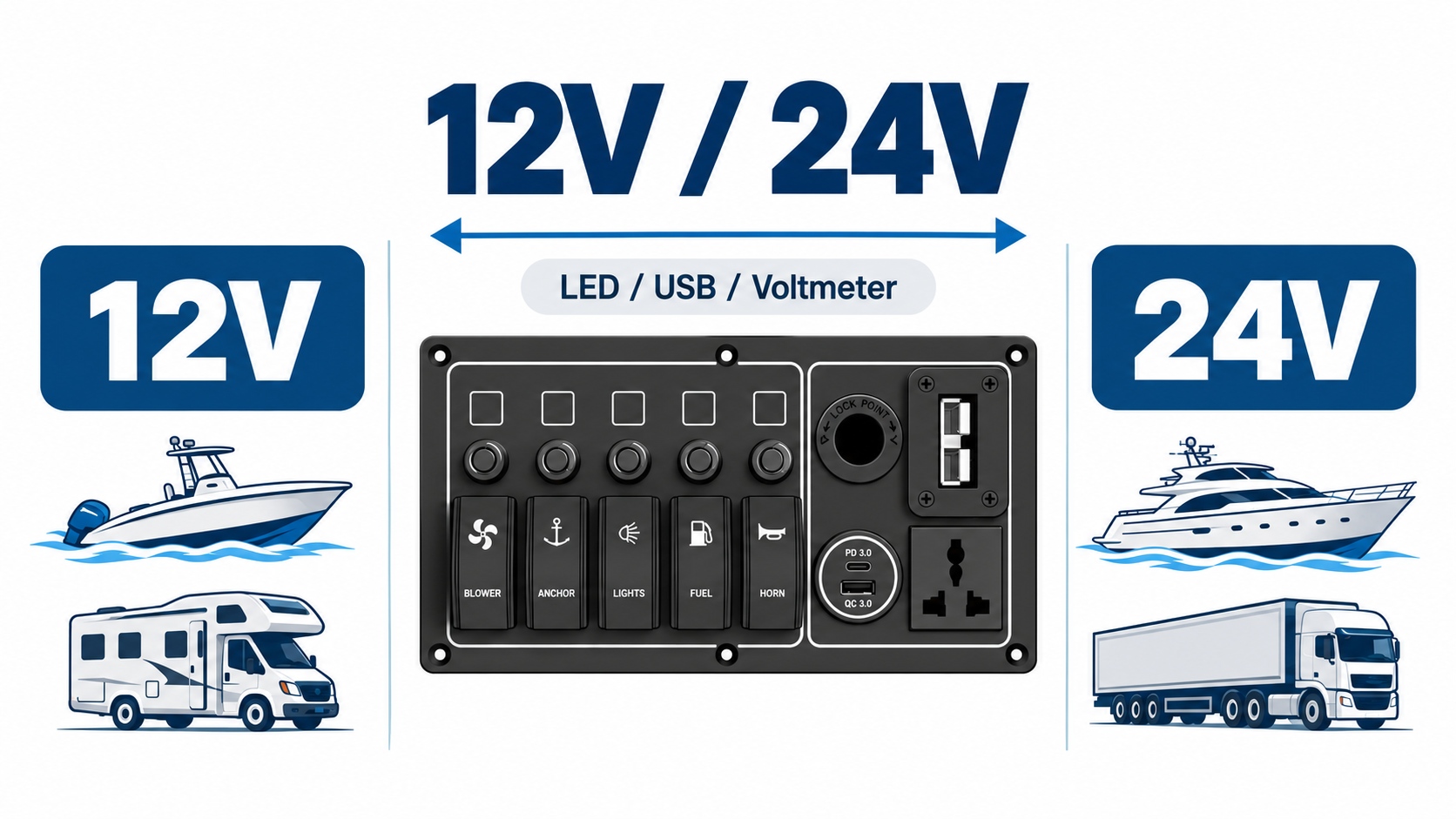
12V Systems
Small boats and RVs often use 12V DC systems.
24V Systems
Larger boats and commercial vehicles may use 24V DC.
The switch panel must match the system voltage.
It is also important to check the built-in parts.
A panel may include:
- LED indicators
- USB chargers
- Voltmeters
- Power sockets
Even if the switch itself can work with 24V, these extra modules may not.
So always check the full specification.
A panel that supports both 12V and 24V can be useful for OEM projects because it can work across more vehicle and marine platforms.
How Many Switches Do You Need?
Boat switch panels are often available as:
- 4 gang
- 6 gang
- 8 gang
Each gang usually controls one circuit.
A small boat may only need four switches. A larger system may need six or eight.
Do not only think about current needs.
Having a couple of spare circuits is useful if you intend to add equipment in the future.
For example, a 6-gang panel may be sufficient today, but an 8-gang panel could offer more space if new lights, pumps, or accessories are added later.

Evaluate the Current Load
Current load is as important as voltage.
Each switch has a maximum current rating.
If the current drawn by the connected equipment is too high, the switch could overheat or become damaged.
Lights usually use less current.
Pumps and motors may use more current, especially when starting.
This startup current can be much higher than the normal running current.
For high-current equipment, a relay may be a better choice.
In that case, the switch controls the relay, and the relay handles the main load.
This helps reduce stress on the panel.
Waterproof Protection Matters
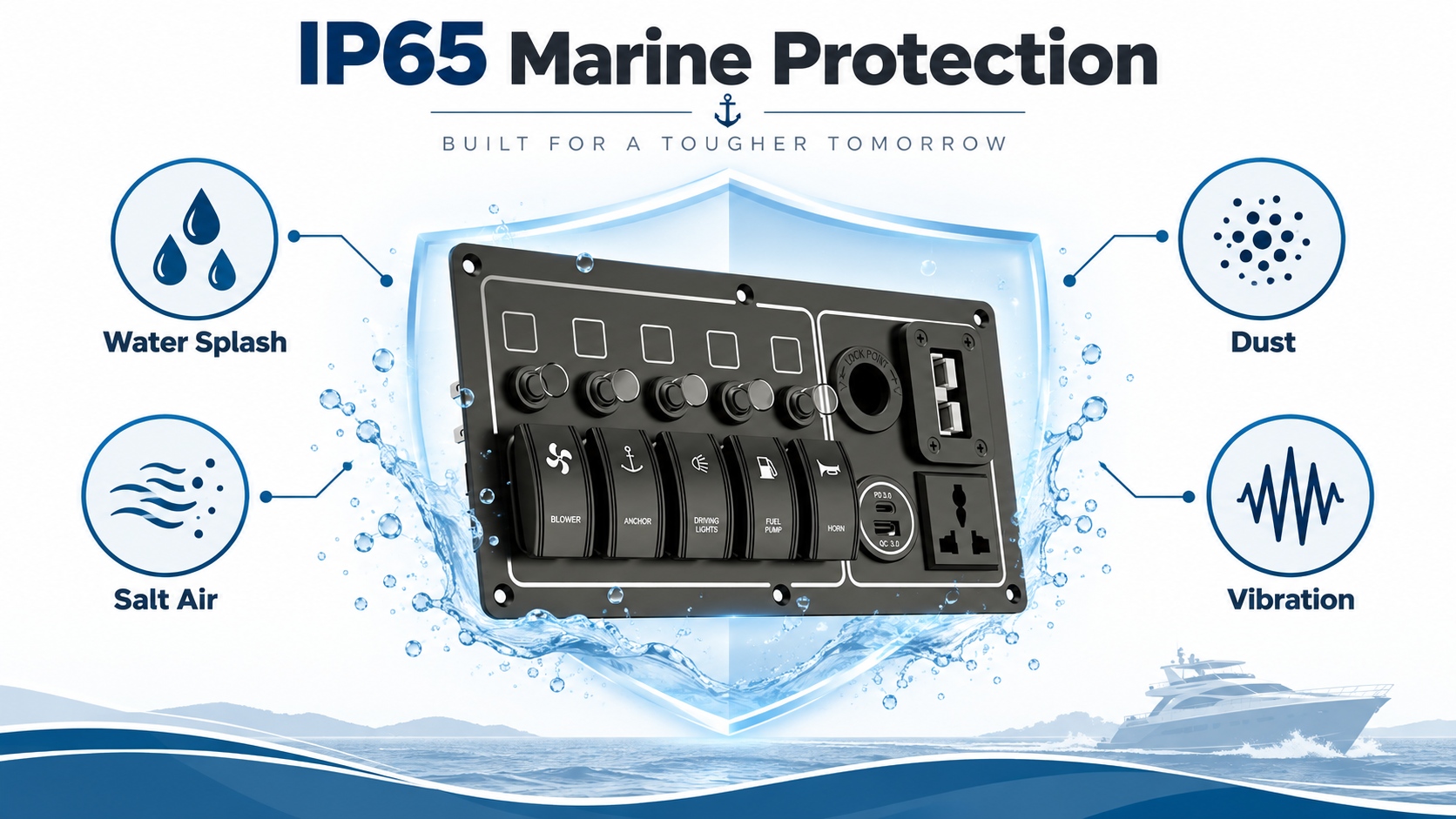
Marine environments contain water, humidity, and salt.
That is why waterproof protection is important for a marine switch panel.
The front of the panel should help protect the switches from water and dust.
If the product has an IP rating, this can help show its protection level.
For example, IP65 means the product is protected against dust and water jets.
However, the rear wiring area also needs attention.
Terminals, wires, and connectors may still need extra protection.
A waterproof panel should also be installed in a suitable position. It should not stay underwater or in a place where water can collect for long periods.
Look for Circuit Protection
Circuit protection can make the system safer and easier to maintain.
Some boat switch panels include individual fuses for each circuit.
This can help isolate a problem.
For example, if one light circuit has a fault, its fuse can protect the wiring without affecting the whole system.
It also makes troubleshooting easier.
Instead of checking every circuit, the user can focus on the circuit with the problem.
For marine systems, this is a useful feature.
USB Charging & Voltmeter Options
Additional options are also available on some latest generation switch panels.
Old fashioned leads like USB-A are still very popular however the newer standard USB-C is becoming used more and more.
Also, the USB- C port may be possible to have a quicker charging time and be able to provide a better power as well.
A voltmeter, which can be useful.
Displays the system voltage.
It can aid users in diagnosing issues with the battery or the charging system.
For example, a very low voltmeter reading could signal a weak battery; whereas, a jaggy reading might be a sign of a charging or wiring failure.
These extra functions are very useful but they should also be designed to suit the system voltage.
Check the Installation Size
Before ordering a panel, check the dimensions carefully.
Important points include:
- Overall size
- Cutout size
- Mounting depth
- Screw position
- Rear wiring space
Mounting depth is easy to forget.
The front panel may be thin, but the switches, terminals, fuses, and wires need space behind it.
If the space is too tight, installation becomes difficult.
Good cable routing also helps make maintenance easier later.
OEM Customization
For boat builders, RV manufacturers, and equipment suppliers, a standard panel may not be enough.
OEM projects often need custom designs.
A custom boat switch panel can include:
- Different gang quantities
- Custom switch functions
- Custom labels
- USB-A or USB-C
- Voltmeter
- Power socket
- Different LED colors
- Custom wiring harness
- Different connectors
Customization can reduce extra wiring and make final assembly easier.
It can also help the panel match the interior and electrical system of the final product.
Common Mistakes to avoid
One common mistake is choosing on the basis of price.
A cheaper panel may therefore not have the correct current specification or may not be waterproof.
The second mistake is selecting too few switches.
This can be a problem making subsequent upgrades a challenge.
Some buyers also forget to check rear installation space.
This panel could be hinged from the front, but there probably would not be enough room for the wiring behind.
Lastly, never take for granted that a 12 V/24 V panel has support for both voltages for every module.
Always be aware of the voltage ratings of the LEDs, the USB charger, the voltmeter, etc.
Conclusion
Choosing a boat switch panel involves far more than the quantity of switches.
The good panel should be the equal of the voltage within the system, current load, the space available for the installation and working conditions.
In marine settings, electrical waterproofing and good electrical connections are critical.
A rocker switch panel can be an effective solution as it is easy for the user to operate, easy to label and modify.
A custom marine switch panel can simplify wiring and could be more suitable for OEM applications.
Before ordering, check the whole electrical system. This will help avoid installation problems.
FAQ
What is a boat switch panel used for?
It controls several onboard electrical circuits from one location, such as lights, pumps, fans, and accessories.
How many gangs should I choose?
It depends on how many circuits you need. Common options are 4-gang, 6-gang, and 8-gang.
Can a 12V switch panel work on 24V?
Only if the switches and all built-in modules are rated for 24V.
Why is waterproof protection important?
Boats are exposed to moisture, water, and salt, so waterproof protection helps improve reliability.
Is a rocker switch panel good for boats?
Yes. It is simple to operate, easy to label, and suitable for many marine electrical systems.
Can a marine switch panel be customized?
Yes. Switch quantity, labels, USB ports, voltmeters, wiring harnesses, and connectors can often be customized.
Boat Fuse Panel and Power Distribution Panel How to Build a Cleaner Marine Electrical System
What Can a 3000W Pure Sine Wave Inverter Power in RV, Marine, and Off-Grid Systems?
Related Article
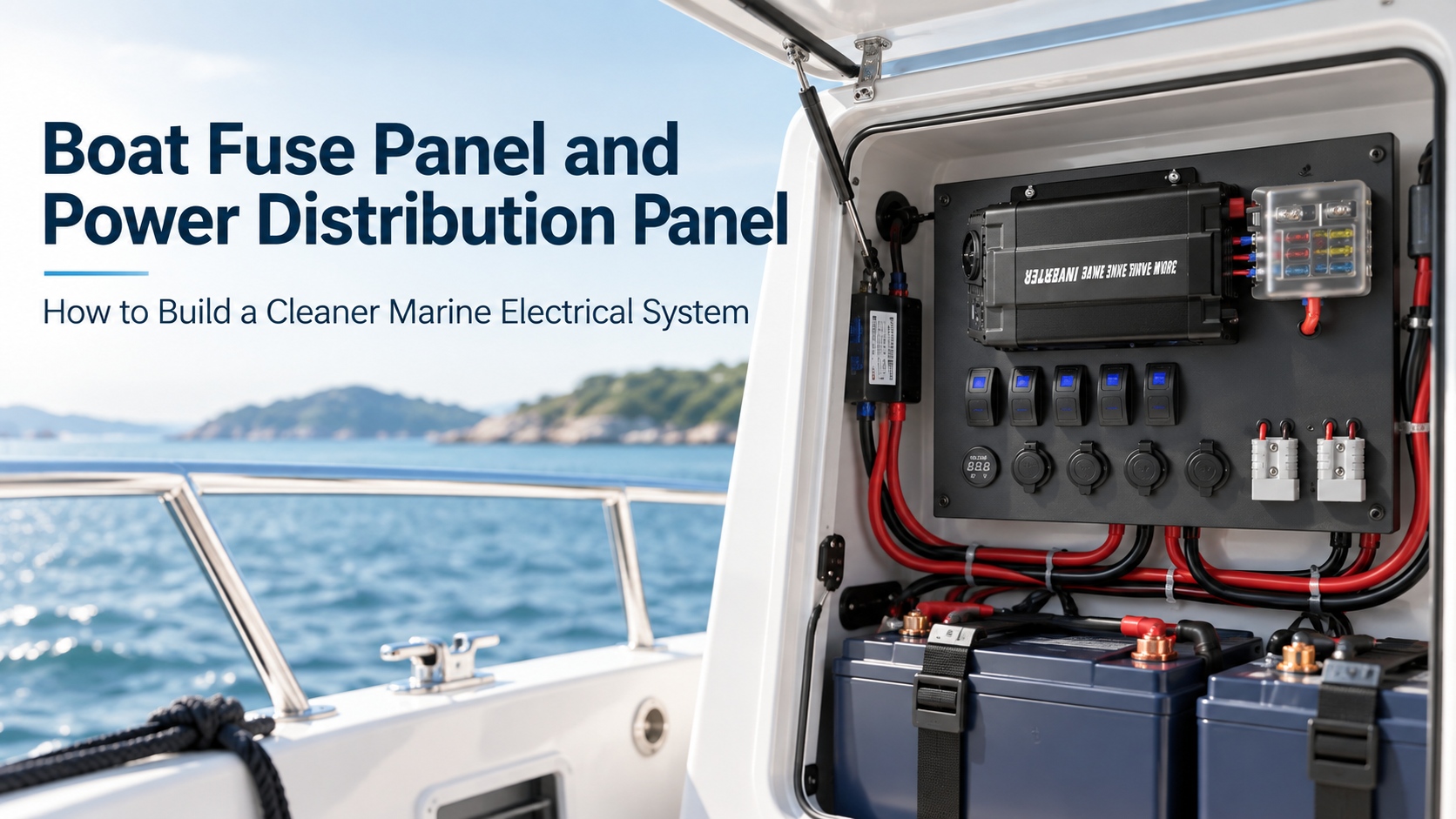
Learn how a boat fuse panel, marine switch panel, and power distribution panel work together to create a cleaner and more organized marine electrical system. This guide covers circuit protection, power distribution, switch control, voltage ratings, wiring layout, and OEM customization.
Boat Fuse Panel and Power Distribution Panel How to Build a Cleaner Marine Electrical System
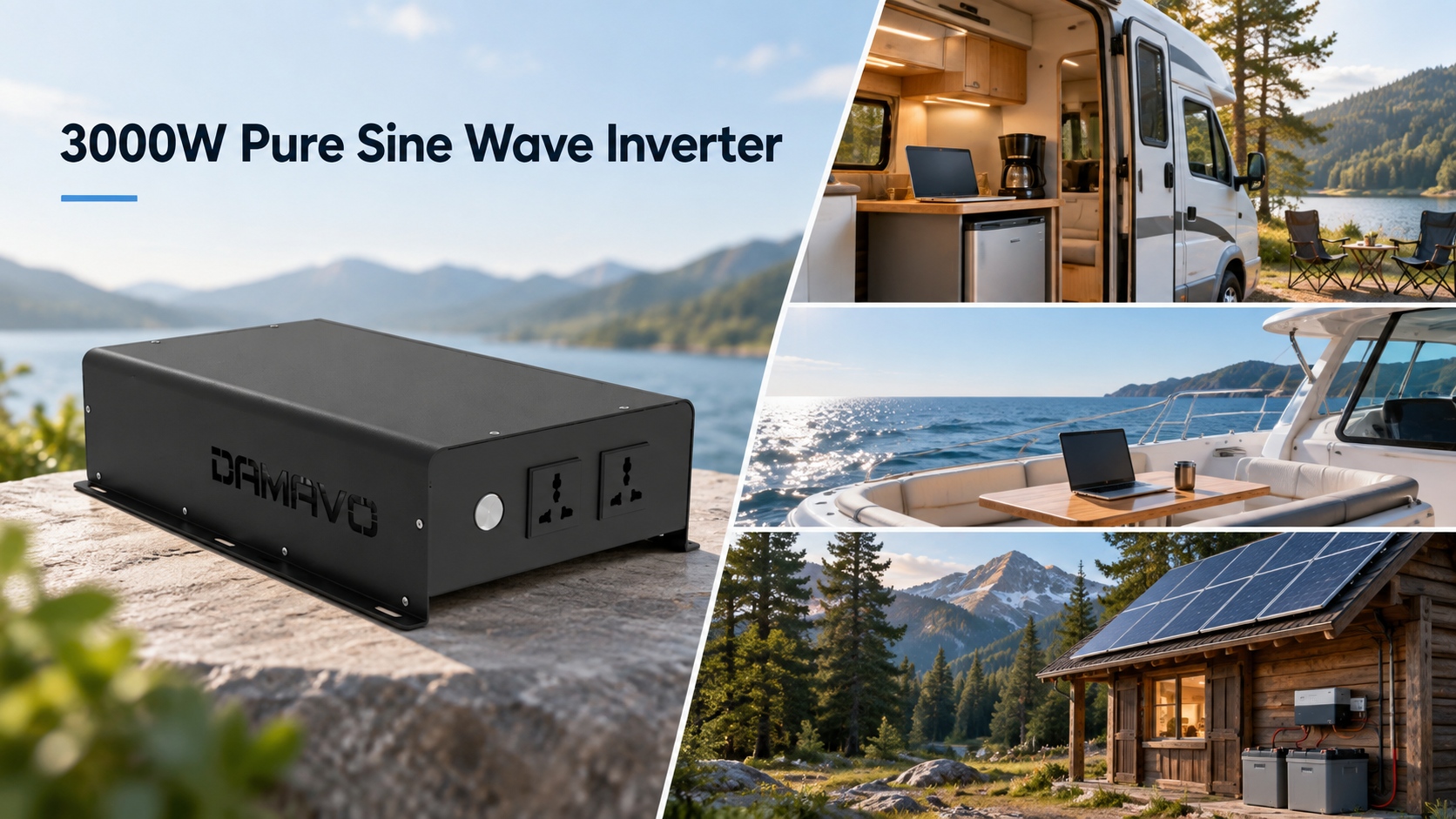
This guide explains what a 3000W pure sine wave inverter can power in RV, marine, and off-grid systems. It also covers startup power, 24V systems, motor loads, and key points to check before choosing an inverter.
What Can a 3000W Pure Sine Wave Inverter Power in RV, Marine, and Off-Grid Systems?

Learn how charging power, coil alignment, heat, mounting position, and magnetic strength affect a magnetic wireless charger in vehicle use. This guide also explains what OEM buyers should check when choosing a magnetic car charger.
Magnetic Wireless Car charger: How does Fast charging influence a Magnetic Car charger
Here is a short, punchy description perfect for an independent website:
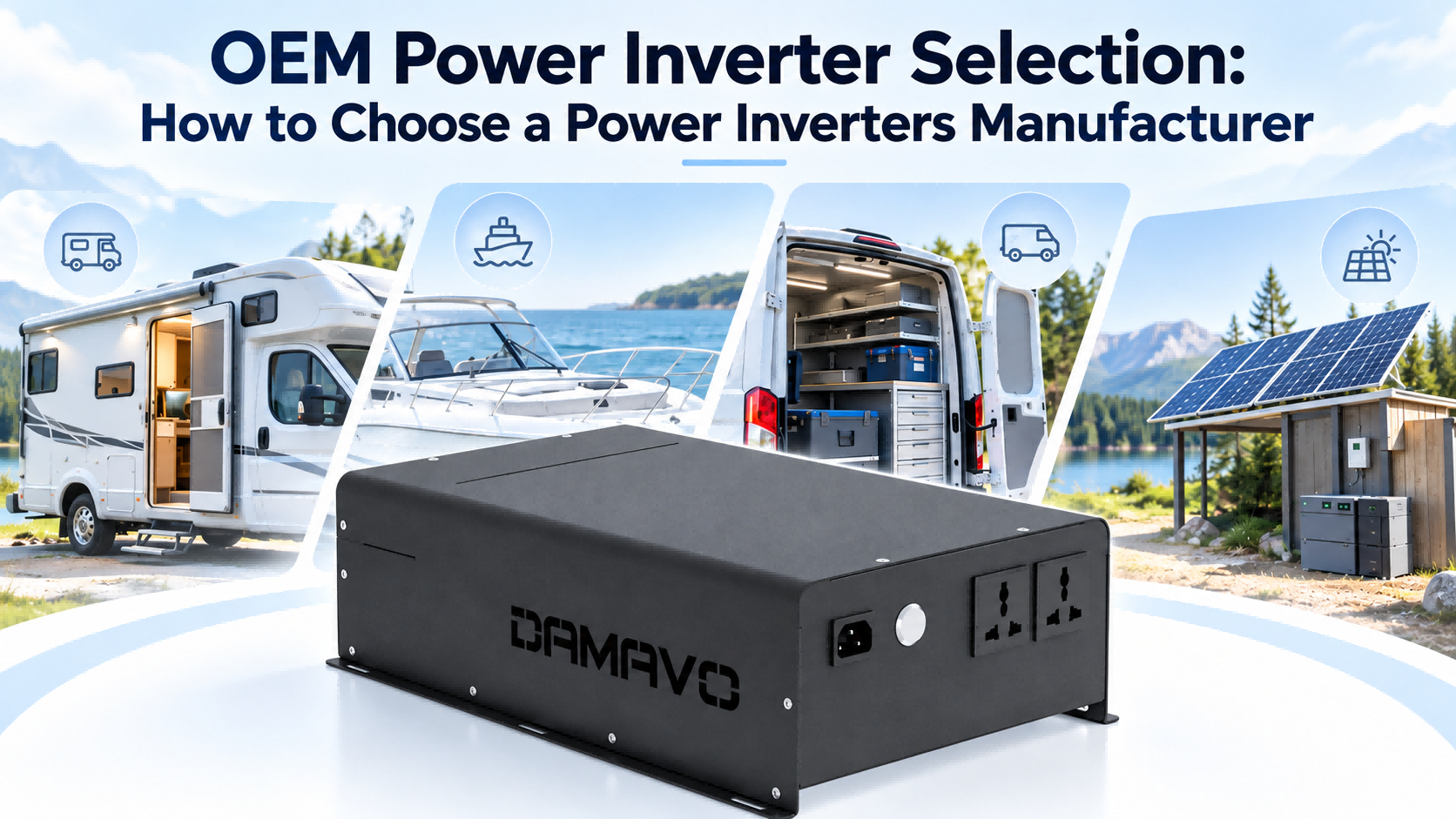
This guide explores the essentials of selecting OEM power inverters, covering critical factors like waveform, voltage, and surge power. It highlights the importance of partnering with a manufacturer that offers robust engineering support, in-house PCBA production, and strict quality control to ensure reliable, stable mass production.
This guide explores the essentials of selecting OEM power inverters, covering critical factors like waveform, voltage, and surge power. It highlights the importance of partnering with a manufacturer that offers robust engineering support, in-house PCBA production, and strict quality control to ensure reliable, stable mass production.
OEM Power Inverter Selection: How to Choose a Power Inverters Manufacturer