How to Choose a Vehicle USB Charging Port: 5 Key Factors to Consider
If the voltage is wrong, the charger may not work well with the vehicle. If the port is too low or faces the wrong way, it may be hard to use. In RVs, work vehicles, and outdoor areas, water and dust can also be a problem.
Before choosing a USB charging port, check these five things:
- Input voltage
- Charging power
- Water protection
- Port angle
- Mounting design
1. Check the Vehicle Voltage First
Start with the vehicle’s electrical system.
Most passenger cars and many RVs use 12V. Trucks, construction equipment, and some commercial vehicles often use 24V. The charger needs an input range that works with the system it will be connected to.
The voltage also changes during normal use. It may rise when the alternator is charging or drop under different loads.
Because of that, a label that only says “12V USB charger” does not tell the whole story. The actual DC input range is more useful.
For an OEM project, these are usually the first details to confirm:
- Vehicle nominal voltage
- Normal working voltage
- Expected voltage changes
- USB charger input range
If one charger can cover both common 12V and 24V systems, it may also be easier to use across more than one vehicle model.
2. USB-C Does Not Always Mean Fast Charging
Although USB-C is becoming more and more popular, a USB-C connector does not always indicate a quick charger.
The output figures are more important.
Examine the charging protocol, maximum power, supported voltage levels, and current.
For instance, many phones, tablets, navigation systems, cameras, and other tiny gadgets used inside cars can be charged with a PD30W charger.
One detail is particularly easy to overlook.
Not all devices must be charged at 30W using a 30W charger. Only the power level that a phone or tablet can support will be used.
Because of this, it is preferable to read the entire output specification rather than evaluating a charger based just on its connector.
3. Waterproofing Depends on Where the Port Goes
Not every vehicle USB port needs IP68.
Since a USB port inside the cabin typically doesn't come into contact with water, IP68 might not be required there.
Construction vehicles, work trucks, boats, and recreational vehicles are all distinct. Their USB ports might be located close to exposed areas like doors, outdoor panels, or damp equipment.
Rain and splashes are possible, and moisture can also build up over time.
In these cases, a higher waterproof rating is more useful.
This is where a waterproof USB charging port becomes more useful.
A good way to decide is to look at the location before looking at the IP rating.
Will the port stay dry? Is there a door, window, deck, sink, or outdoor workspace nearby?
The answer is usually more useful than simply choosing the highest IP rating.

4. Why Does the Port Angle Matter?
This is something that is easy to forget until the charger is in place.
Even if a USB port is perfectly sized for the panel, it may still be difficult to use.
For instance, it could be difficult to see or reach a flat connector if the port is positioned next to a seat or low on the dashboard.
The cable may also leave the port at an awkward angle.
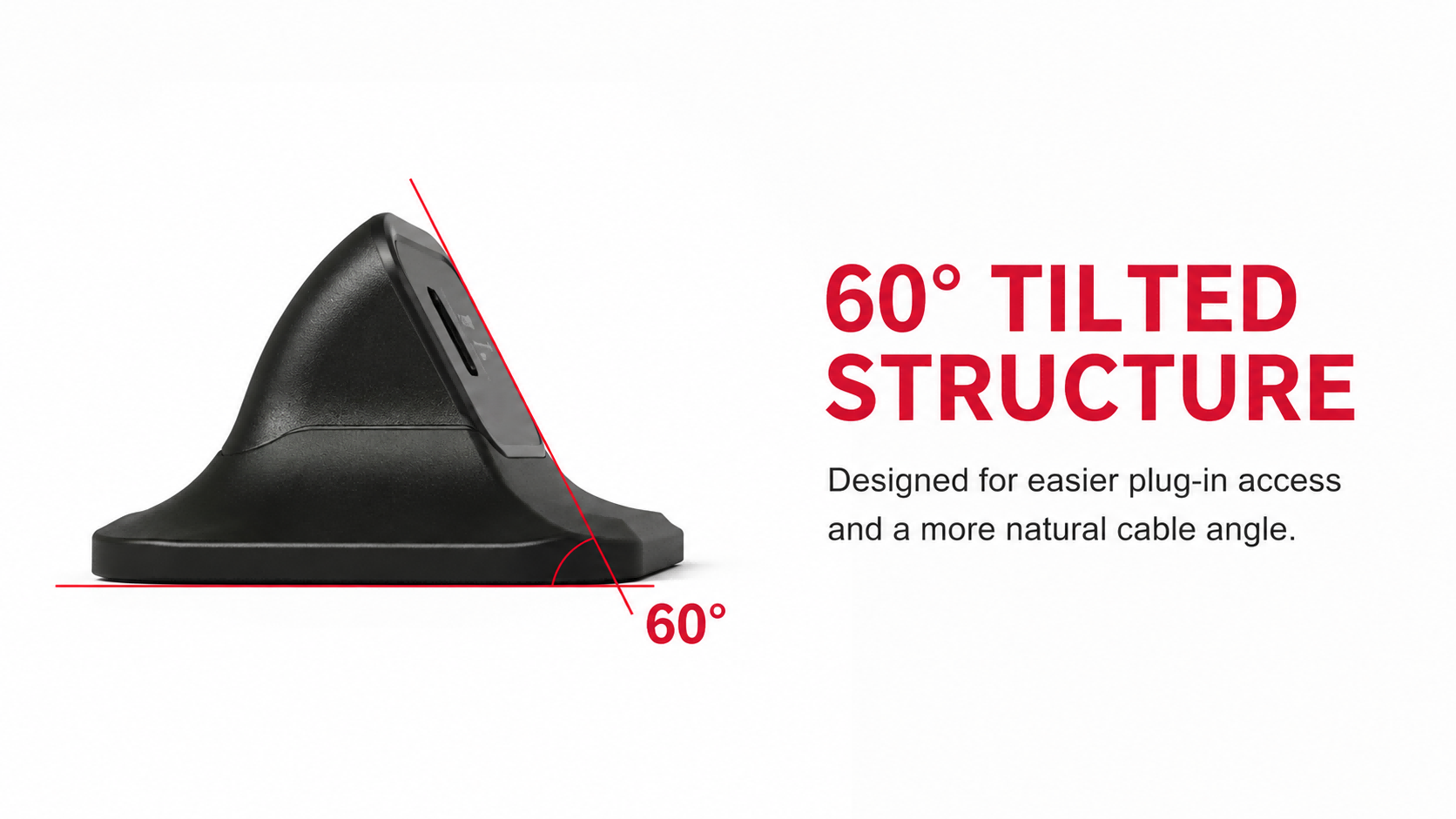
A tilted interface can solve some of these small problems.
It can bring the connector closer to the user and give the cable more room to sit naturally.
This matters even more when the mounting space is narrow or the port is close to another part of the interior.
So when checking a panel mount USB charger, do not stop at the mounting hole size. Think about where the connector will face once the panel is installed.
5. Housing and Mounting Still Matter
A built-in USB charger is not something users normally remove every day.
Once it is installed, it may stay in the same panel for years.
That makes the housing and mounting method worth checking.
Some useful details include:
- Housing material
- Flame-retardant rating
- Mounting method
- How firmly the unit is fixed
- Whether it can be replaced or serviced later
ABS with a 94-V0 flame-retardant rating can be suitable for vehicle electrical parts where flame resistance is required.
The mounting method should also be practical. It should not make assembly difficult, but it still needs to hold the charger securely during normal vehicle use.
Different Vehicles Have Different USB Charging Needs
A passenger car and a construction vehicle do not have the same needs.
In a passenger car, the main concern may simply be whether the port is easy to reach and provides enough charging power.
An RV or camper may need a wider voltage range and better water protection. This matters more if the USB port is near a door, kitchen, or other wet area.
Commercial vehicles may use the charger many times a day. Because of this, the port should be mounted firmly and built to last.
Construction and special-purpose vehicles usually operate in tougher conditions. Dust, water, vibration, and installation position deserve more attention there.
For marine use, moisture is an obvious concern, but the position of the port matters as well.
This is why the same charger does not automatically work equally well in every vehicle.
A Real Vehicle USB Charging Configuration
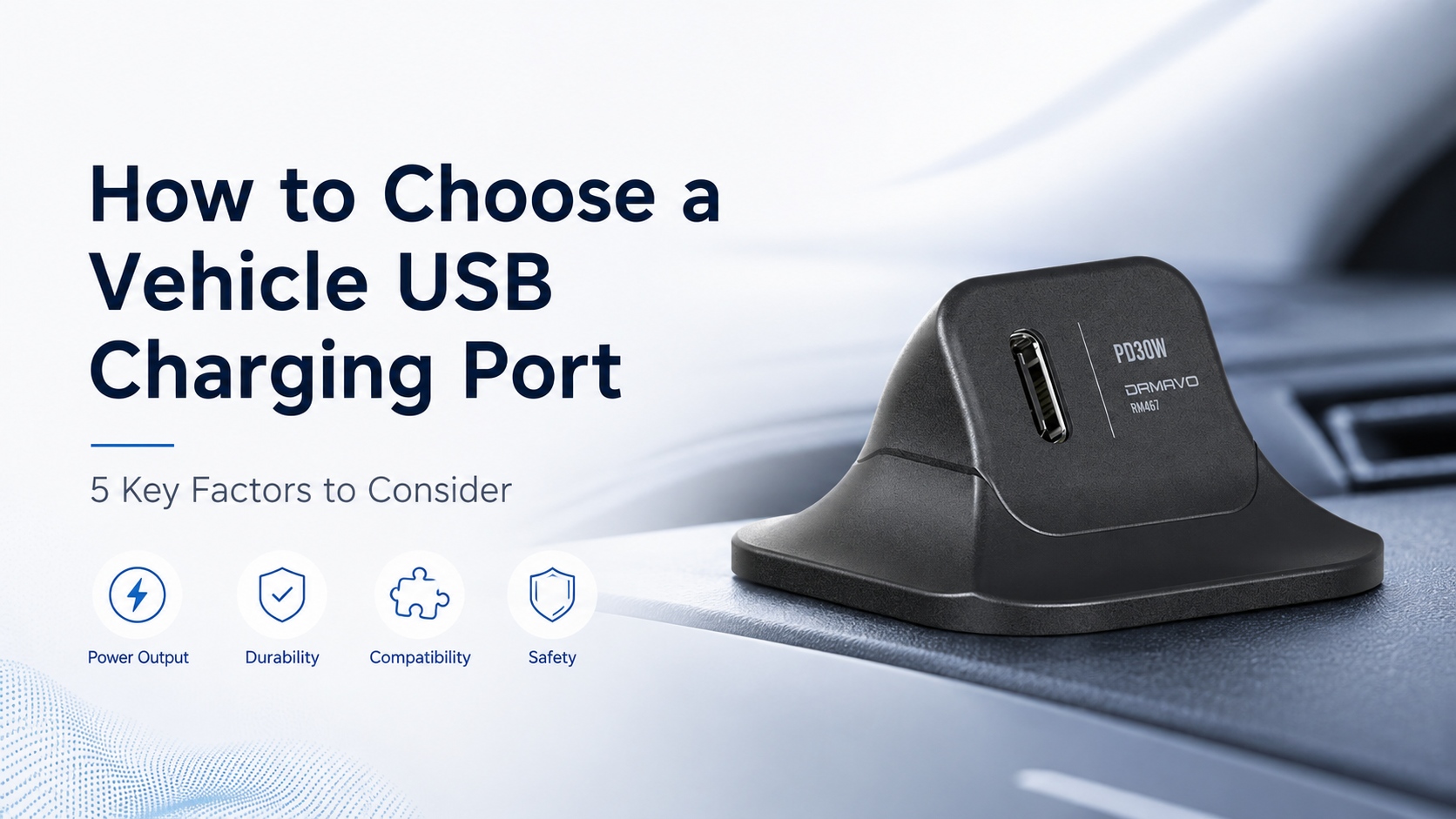
One DAMAVO® vehicle USB charging model uses the following specification:
- Input: 7.3V-30V
- Output: PD30W
- PD output: 5V/3A, 9V/3A, 12V/2.5A
- Waterproof rating: IP68
- Material: ABS 94-V0
- Indicator light: None
- Interface design: 60° tilted structure
The 7.3V-30V input range allows the unit to work with common 12V and 24V vehicle systems.
Its PD30W output is intended for everyday devices such as phones, tablets, GPS units, and other USB-powered electronics.
The IP68 design is more useful when the port may be exposed to moisture or splashes.
The 60° angle serves a different purpose. It makes the connector easier to reach in some low or narrow mounting positions and can help reduce sharp cable bending.
This kind of detail does not look very important on a specification sheet, but it can make a noticeable difference after installation.
What Should OEM Buyers Confirm?
For a production project, product specifications are only part of the job.
Before making samples, it is useful to confirm:
- Vehicle voltage range
- USB charging protocol and output
- Mounting size
- Waterproof requirement
- Cable and connector type
- Color and logo
- Other project-specific changes
It is usually much easier to confirm these points before sampling than to change them later.
power inverters FAQ
Can One USB Charger Work With Both 12V and 24V Vehicles?
Yes, if its input range covers both systems.
A charger with a 7.3V-30V input range can be used with common 12V and 24V vehicle electrical systems.
Is PD30W Enough for Daily Use?
For many phones, tablets, GPS units, and similar devices, yes.
The final charging speed still depends on the connected device.
Does Every Vehicle USB Port Need IP68?
No.
If the port stays inside a dry cabin, IP68 may not be necessary. It becomes more useful in RVs, boats, work vehicles, and other locations where moisture or dust may reach the port.
What Is the Difference Between a Vehicle USB Port and a Car Port Charger?
A vehicle USB port is usually installed directly into a dashboard or another panel.
A car port charger often means a removable charger that plugs into the vehicle’s 12V cigarette lighter socket.
Conclusion
Choosing a vehicle USB charging port is really about matching the part to the vehicle.
A car may need easy access and enough charging power. An RV may need wider voltage support and better water protection. A work vehicle may put more importance on mounting strength and durability.
There is no need to chase every high specification. The better choice is the one that fits the electrical system, mounting area, and way the vehicle will actually be used.
For projects that require 7.3V-30V input, PD30W charging, IP68 protection, and a 60° tilted interface, DAMAVO® offers a vehicle USB charging solution that can also be adapted for different installation and OEM requirements.
OEM Power Inverter Selection: How to Choose a Power Inverters Manufacturer
Power Inverters Selection Matrix: How to Choose the Right Inverter for Your Application
Related Article